
Trusted UK Casino: Licence, Checks and Protections
 Available in GB
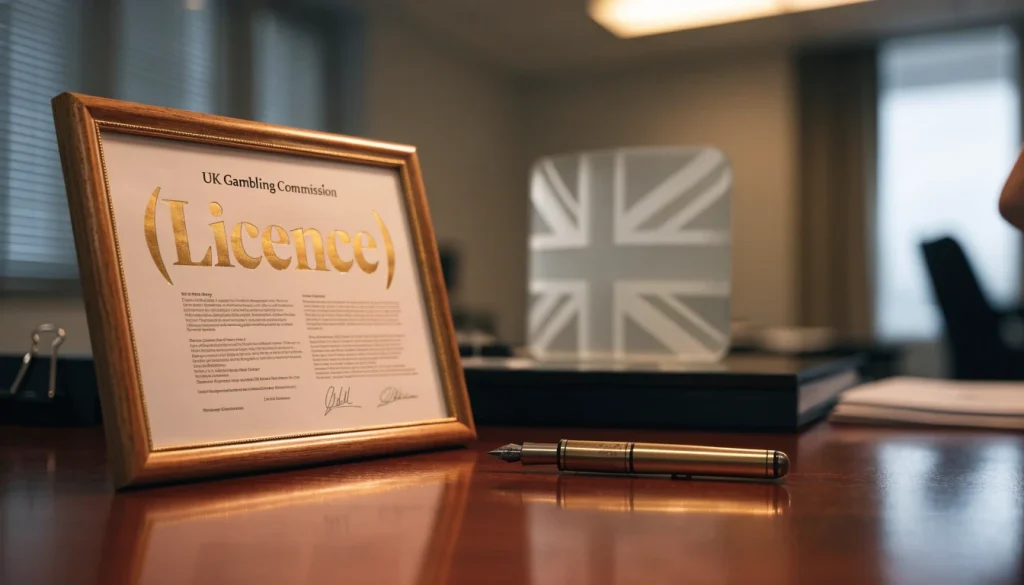
A practical guide to licensing boundaries, identity checks, account safeguards and the evidence behind payment and bonus claims.
Table of Contents
- What a UK Gambling Licence Actually Covers
- Real-Money Play Begins with Verification
- The Protections Behind a Casino Account
- Trust Signals That Can Be Checked
- Crypto Casinos and the Limits of What Can Be Verified
- Enforcement, Penalties and the UK’s Jurisdictional Boundaries
- Reviews, Free Spins and the Small Print
- Casino Apps and Account-Level Safeguards
- Bitcoin and Dogecoin: What the Evidence Does Not Settle
- Live Tables, E-Wallets and Withdrawal Timings
- Types &
What a UK Gambling Licence Actually Covers
A UK Gambling Commission licence is the legal threshold for a remote casino that offers real-money gambling to people in England, Scotland or Wales. The operator’s own location does not change that requirement. A business based overseas still needs the relevant licence if it provides gambling facilities to customers in Great Britain.
That distinction matters because “UK casino” can describe where a customer is, where a company is registered, or simply the market a website appears to serve. These are not interchangeable. For remote gambling, the decisive point is whether the operator is offering its service to consumers in Great Britain. A foreign address does not take that activity outside the licensing requirement.
The Commission’s role follows the same boundary: it oversees remote gambling supplied to people in Great Britain. Its remit is not a general seal on every business that uses British imagery, writes in English or accepts customers from elsewhere. Nor does a licence turn every claim made by a casino into a regulated fact. It establishes that the operator has the relevant permission to offer the covered gambling service in this market.
Choosing a trusted UK casino means looking beyond the headline and considering practical details that matter to your play. Use this list as a starting point, and check each operator’s current terms before signing up.
1. NightLuck
Payout speed: 1-3 business days NightLuck lists payout times of 1–3 business days, giving you a clear timeframe to consider when planning withdrawals.
2. Dieselwin
Payout speed: 1-3 business days Dieselwin lists payout times of 1–3 business days. This stated timeframe is a practical detail to keep in mind when considering the operator.
3. Jetsetspins
Payout speed: 1-3 business days Jetsetspins lists payout times of 1–3 business days, offering a stated timeframe for withdrawals.
4. Chanze
Payout speed: 1-3 business days Chanze lists payout times of 1–3 business days. Consider this published timeframe as part of your review.
5. SpinFormula
Payout speed: 1-3 business days SpinFormula lists payout times of 1–3 business days, providing a concrete withdrawal detail to factor into your choice.
6. WinBeast
Payout speed: 1-3 business days WinBeast lists payout times of 1–3 business days. This gives you a stated timeframe to bear in mind for withdrawals.
7. BeOnBet
Payout speed: 1-3 business days BeOnBet lists payout times of 1–3 business days, a useful practical detail to check alongside its current terms.
8. EvoSpin
Payout speed: 1-3 business days EvoSpin lists payout times of 1–3 business days, giving you a stated timeframe to consider when reviewing the operator.
9. Revery Play
Payout speed: 1-3 business days Revery Play lists payout times of 1–3 business days. Keep this stated withdrawal timeframe in mind when assessing whether it suits you.
10. NightWin
Payout speed: 1-3 business days NightWin lists payout times of 1–3 business days, providing a clear withdrawal timeframe for your consideration.
That is a narrower, more useful meaning of trust than the word often carries in advertising. A licensed operator has crossed a legal threshold; the licence is not a personal recommendation, nor a promise that every feature will suit every player. The phrase “trusted online casino in the UK” becomes less vague when translated into a checkable question: does the business providing real-money gambling to Great Britain customers hold the relevant UKGC Licence?
The answer cannot be inferred from a polished website or a British-sounding brand. A company may be based elsewhere and still be required to hold a licence. Conversely, a website’s apparent connection to Britain does not, by itself, establish that it has the necessary permission. The rule attaches to the service being offered, not to the impression created by its presentation.
This arrangement reflects a basic choice in public regulation. Rather than treating online gambling as beyond reach because a company operates across borders, the licensing rule makes access to the British market conditional on local permission. The internet may make a casino’s location difficult to see; the legal test does not depend on making that location visible. It depends on whether the operator is serving consumers in the regulated territory.
Non-UK-Regulated Casinos: Rules and Risks
There is also a difference between the country named in everyday speech and the territory covered by this particular licensing framework. “UK” is convenient shorthand, but the Commission’s remit described here concerns Great Britain. That precision matters when a claim is being assessed: a licence relevant to service in England, Scotland and Wales is not a universal statement about every jurisdiction associated with the United Kingdom.
For someone comparing casinos, this makes the licence a starting point rather than a complete verdict. It answers a foundational question about whether a remote operator may legally provide real-money gambling to customers in Great Britain. It does not, on its own, settle every separate question about an account, a payment, a promotion or an individual experience. Those belong to other parts of the relationship between a casino and its customers.
The distinction can seem fussy until a familiar label is asked to do too much. “Licensed” is meaningful, but only when tied to the right operator, service and market. A casino’s status cannot be established by the mere presence of a logo, a line of legal text or a claim that it is among the most trusted online casinos. Such language may invite confidence; the licensing requirement itself is more exact.
In practical terms, any operator offering real-money gambling to customers in England, Scotland and Wales must hold a UK Gambling Commission licence, wherever its business is based. That is the core protection of the licensing threshold: a remote casino cannot lawfully treat distance as an exemption when serving this market. It is not a universal certificate of virtue. It is permission with a defined reach.
Real-Money Play Begins with Verification
A real-money account begins with a check on who is opening it. In Great Britain, an online casino must verify a customer before allowing a deposit or play. That makes identity checks part of the entrance to gambling, not merely paperwork reserved for the moment a balance is ready to leave the account.
Attention: An account registration form may be accepted, but deposits and play are unavailable until the identity and address information has been verified.
The distinction matters because registration can feel complete before the account is cleared for use. A form may accept a name, address and date of birth, yet the information still has to be verified. Until that happens, depositing and playing are not available. The process is less like signing up for a newsletter than establishing that the person behind an account is the person named on it.
What the documents establish
Identity verification commonly involves a photograph of a passport or driving licence, alongside a recent utility bill as proof of address. Together, these documents help connect a person to the details supplied during registration. A photo ID supports the identity claim; the bill supports the address claim.
The documents need to be readable and relevant to the account details. A blurred image or an address that does not match the registration information can leave the check unresolved. The practical point is simple: verification depends on the evidence being usable, not just uploaded. No particular document can be assumed to suit every operator or account, so the requirements shown during registration remain important.
That does not make the process a judgement on whether someone is a suitable player. It is an identity and address check tied to access to real-money gambling. The distinction is easy to miss when a casino presents the steps as routine account administration. Routine, perhaps; optional, no.
An account holder should also expect the timing of checks to affect the experience. Under the UK rules, the check must be completed before the first deposit or game. This means a site cannot treat early play as a trial period and postpone the basic verification until a customer has already begun gambling.
USA Casinos for UK Players: Licensing and Payouts
The withdrawal moment
Verification can still become relevant again when money is requested. LeoVegas, for instance, requires identity verification and may carry it out at the first withdrawal, asking for photo ID and proof of address dated within three months. That detail illustrates why the moment a check is requested and the documents it concerns both matter.
The withdrawal-stage check should not be confused with permission to delay the required pre-play verification. The general rule remains that a customer must be verified before depositing or playing. A later request can involve confirming the account details when funds are due to be paid out; it does not erase the earlier requirement.
This is one reason a balance shown on screen is not the same thing as money already received. If an identity or address check is still outstanding, a withdrawal may be held up while the operator reviews the evidence. A player can therefore encounter verification at more than one point in the life of an account, even though the initial check belongs before real-money play.
The documents also have a practical shelf life in the operator’s process. LeoVegas specifies proof of address dated within three months. That is an operator-specific requirement, not a universal date that can be applied to every casino. An older bill may establish where someone once lived; it may not satisfy a request for current proof.
A small administrative threshold
The language of trust often focuses on a casino’s reputation, its welcome offer or the payment methods it displays. Those features do not settle whether an individual account has passed its checks. For real-money access, identity and address evidence sit closer to the ground: they determine whether the account can be used at all.
Do
- Provide readable documents
- Ensure address matches registration
- Use a current utility bill
Don’t
- Upload blurred images
- Assume verification is optional
- Expect identical document lists
This can make verification feel like an interruption, particularly when it appears after registration or around a withdrawal. Yet the sequence is part of the rules governing online gambling in Great Britain. The operator must establish the customer’s identity before deposits and play, while a later request may still require the account holder to confirm details.
The sensible expectation is neither that every check will be instantaneous nor that every operator will ask for precisely the same documents. The known starting point is narrower: a passport or driving licence photograph and a recent utility bill are common evidence, and the operator’s stated requirements govern the account-specific request. With real money involved, administration is the first game.
The Protections Behind a Casino Account
Trust is often discussed as though it belonged to the operator alone: a matter of reputation, presentation or a reassuring logo. But a casino account is also a set of controls over how gambling fits into a person’s life. The useful question is not whether a site calls itself responsible. It is whether the account offers ways to pause, draw boundaries and seek help when those boundaries begin to matter.
Self-exclusion is the clearest form of pause. It is not a spending limit or a reminder to take care; it is a formal step intended to prevent access to gambling. In Great Britain, online operators within the Gambling Commission’s regime must participate in GAMSTOP. Participation became compulsory on 31 March 2020, making the scheme part of the expected protection around regulated online gambling rather than an optional badge of virtue.
That distinction matters. A control confined to one account can be useful, but it does not have the same reach as a scheme designed to cover participating operators. Self-exclusion is best understood as a barrier, not a cure: it can help interrupt access, but it cannot resolve the circumstances that made a barrier necessary. Treating it as a practical safeguard, rather than a moral test, is more honest and more useful.
Casino Sites Not Registered with GamStop in the UK
Limits as a matter of control
Limits work differently. They allow a customer to set boundaries around gambling activity, while self-exclusion is about stopping access. A functioning account should make its controls accessible, not bury them among promotional settings or account housekeeping. The point is not to decorate an account with responsible-gambling language; it is to make a decision possible at the moment it is needed.
The timing of changes is part of that protection. A reduction to a limit takes effect immediately, while an increase is subject to a cooling-off delay. The arrangement is deliberately asymmetric. Lowering a boundary should not require a period of waiting, whereas raising it should not be an impulsive reversal made in the same moment. A small piece of interface design carries a larger judgement about how people make decisions under pressure.
Limits are not proof that gambling is harmless, nor do they guarantee that a person will stay within them. Their value lies in giving the account holder a mechanism for setting a boundary and making an increase less immediate. A limit that cannot be found, or whose consequences are unclear, is a weak instrument. A limit that can be changed in only one direction at once is still only one part of a broader set of protections.
Reductions to gambling limits take effect immediately, whereas increases are subject to a cooling-off delay to prevent impulsive decisions.
Help beyond the account
When gambling becomes difficult to manage, support should not be reduced to a button in a settings menu. The National Gambling Helpline is available around the clock on 0808 8020 133. Its existence matters because an account control can restrict access, but it cannot listen, help someone describe what is happening or discuss what support might be appropriate.
The difference between an account tool and human support is not a technicality. Digital controls are built around actions: set, reduce, exclude. A conversation can address the confusion, shame or strain that may sit behind those actions. Neither replaces the other. A person may need a formal exclusion and support beyond it; another may want advice before deciding what step to take. The route should not depend on first proving that things have reached a crisis.
These safeguards do not make any casino a guarantee of safety. They do show whether the account is designed only to facilitate play or also to provide ways of interrupting it. In that sense, trust is less a mood than a structure: a shared exclusion system, usable limits, an immediate route to reduce them and support that exists outside the operator’s own interface. A quieter test than a slogan.
Trust Signals That Can Be Checked
Trust is often presented as a mood: a polished page, familiar branding, reassuring language. A regulatory register offers something less atmospheric and more useful. It can connect a website used by British customers with the business named on its UK Gambling Commission record. That connection is evidence of a UK-facing regulatory presence, not a general certificate that every aspect of the business is beyond criticism.
Casino Without a Swedish Licence: UK Rules Explained
The register gives a concrete example in LeoVegas. Its domain information associates leovegas.co.uk with operator account 39198, identifying it as the domain for the UK-facing service. The Commission’s operator record assigns that same account number to LeoVegas Gaming PLC. Read together, the entries link a recognisable web address to a named legal operator. The shared account number matters: a matching brand alone would be a weaker clue, since branding and the company responsible for a service are not necessarily the same thing.
This is the practical value of the register. A name in a footer, a licence badge or a page describing a casino as trusted may be easy to display. The regulator’s own records provide a way to test whether the domain and operating company appear in the same official trail. The relevant question is not simply whether a casino says it is licensed, but whether its UK-facing address can be connected to the operator recorded by the Commission.
That comparison needs to be exact. A similar name, a different web address or a reference to another company does not establish that the site being viewed is the one covered by the record. Domain information and operator details should be read together, rather than treating either as a decorative badge. If the entries do not line up, the discrepancy is a reason to pause and establish what entity is actually running the service.
A register entry also has limits. It establishes what the regulator records about an operator and its listed domain; it does not, by itself, settle every question about service quality, individual complaints or future conduct. Records can change, and a check describes the published position at the time it is made. Trust is not a permanent property conferred by a line in a database.
Caution: A regulator’s record identifies the operator and domain but does not certify the quality of specific games or guarantee future conduct.
Nor does a regulator’s record certify the games themselves as trustworthy in every sense of that word. It is evidence about the operator and its UK-facing presence, not an endorsement of particular titles or a guarantee about outcomes. That distinction is easily blurred in casino marketing, where the operator, the games and the experience are often wrapped in one glossy promise.
A register is no ranking of the most trusted UK casinos, and it cannot turn a promotional claim into a finding. Its virtue is narrower: it makes one important relationship checkable. Less glamour, more evidence.
Crypto Casinos and the Limits of What Can Be Verified
“Crypto casino” sounds like a category with its own rules. In practice, the phrase describes a payment idea, not a regulatory status. A site’s use of cryptocurrency in its branding cannot, by itself, establish who operates it, what protections apply or whether it may lawfully offer remote gambling to people in Great Britain.
That distinction matters because the location of a business does not remove the licensing requirement. A remote gambling business offering facilities to consumers in Great Britain needs the relevant UK Gambling Commission licence, whether it is based in Britain or elsewhere. The rule attaches to the service offered to the market, not to the currency named in a promotional claim.
Non-UKGC Licensed Casinos: Rules and Risks
The word “trusted” is harder to pin down. It can mean that a company is identifiable, that its gambling activity falls within the British regulatory system, or simply that its own presentation feels reassuring. Those are not equivalent tests. Cryptocurrency may be part of a site’s payment proposition, but it does not answer the regulatory question. Nor does an attractive interface turn a claim into proof.
There is a social history in this confusion. Money has always carried more than purchasing power: it also signals membership, control and confidence in the institution that holds it. Digital tokens can make the transaction feel detached from familiar financial structures. That feeling may be part of their appeal. It is not evidence about the legal basis on which a casino serves a particular country.
A careful account of a crypto casino therefore separates two propositions. One concerns whether a business accepts a particular digital currency and how its payment arrangements work. The other concerns whether the business holds the licence required to offer remote gambling in Great Britain. One does not establish the other. The payment feature cannot stand in for the licence, and the licence requirement does not, on its own, describe the mechanics of a crypto transaction.
This is why “most trusted” is not a meaningful conclusion from a cryptocurrency label alone. Trust is not a property that can be inferred from a coin logo, a promise of privacy or a polished account page. In the British market, the relevant regulatory threshold remains the same for a remote gambling business serving consumers in Great Britain, regardless of where it is based. The technology may change; the jurisdictional question does not.
The distinction is less glamorous than the currency itself. It is also the useful one. A crypto claim concerns how a site presents a payment option; the UKGC Licence requirement concerns whether the operator may offer remote gambling to people in Great Britain. Keeping those questions apart prevents a payment feature from being mistaken for a safeguard.
Licensing Requirement Any remote gambling business offering facilities to consumers in Great Britain must hold a UK Gambling Commission licence, regardless of its location or use of cryptocurrency.
Enforcement, Penalties and the UK’s Jurisdictional Boundaries
A register entry can establish a connection between an operator and a domain; it cannot, by itself, tell the whole story of how that operator has behaved. A specialist casino review has described the UK Gambling Commission’s public register as linking 333casino.com to Grace Media (Gibraltar) Limited, under account 57869, as a White Label domain. That is a specific recorded relationship, not a general assurance about every site using the same arrangement.
The distinction matters because regulation is not a certificate of flawless conduct. It is an ongoing system of duties and scrutiny, with consequences when those duties are breached. On 26 June 2025, the Commission imposed a £60,000 financial penalty on Grace Media. The breaches involved self-exclusion and consent for direct electronic marketing. The subjects are closely related: one concerns a person’s effort to step away from gambling, the other whether commercial messages may reach them. A company’s name in a register and its record of compliance answer different questions.
A penalty also gives the word “trust” a less decorative meaning. It cannot make an operator’s past disappear, but it shows that the regulator can investigate conduct and impose a financial consequence. Nor does a published decision establish that every similar failure will be treated identically. Enforcement is evidence of oversight, not a promise that oversight prevents every lapse.
There is a further boundary hidden in the phrase “UK regulation”. The Gambling Act 2005 gives the Gambling Commission jurisdiction over Great Britain: England, Scotland and Wales. Northern Ireland is not within the Commission’s remit for remote-gambling provision in the same way. Its gambling framework rests on separate legislation, including the Betting, Gaming, Lotteries and Amusements (Northern Ireland) Order 1985.
VPN-Friendly Casinos in the UK: Access and Rules
That geographical distinction is not a footnote for constitutional specialists. “UK casino” is common shorthand, but the regulator’s authority does not map neatly onto the whole United Kingdom. A statement about Commission oversight in Great Britain should not be silently extended to Northern Ireland. The words look interchangeable. The jurisdiction is not.
The same care applies when reading enforcement news. A penalty against a named company is not proof that every domain associated with it has committed the same breach; nor is a register relationship a guarantee about future conduct. The useful picture comes from holding both facts together: the public record identifies an operator relationship, while the regulator’s actions show that compliance remains open to challenge. No badge settles the matter.
Reviews, Free Spins and the Small Print
A casino review can make a welcome offer look simpler than it is. The headline describes what may be awarded; the terms determine who qualifies, what must be done before winnings can be withdrawn, and when the offer expires. A free-spin figure, on its own, says little about the practical value of a promotion.
Wagering arithmetic makes the distinction plain. A specialist review gives the example of a £20 bonus with 10x wagering: the required total is £200 in stakes. That is turnover, not a payment owed to the casino, and it does not mean £200 will be won. The bonus terms should also say whether wagering applies to the bonus, winnings from spins, or both. Those details change the calculation.
Bonus Wagering
Step 1: Calculate Total Stakes
For a £20 bonus with 10x wagering, the player must place a total of £200 in stakes.
Step 2: Check Game Contribution
Determine if the chosen game counts fully (100%) or at a reduced rate toward the £200 requirement.
Step 3: Verify Expiry
Ensure the wagering is completed within the specified period, typically between 7 and 30 days.
Game contribution matters too. A specialist review notes that slots may count fully towards a wagering requirement, while live tables and blackjack may count at a lower rate or not count at all. A player who spends the balance on a game with reduced contribution may make less progress than the headline multiple suggests. The percentage assigned to each game is therefore more useful than a general assurance that play “counts”.
Eligibility can narrow the offer further. A specialist review reports that welcome deals are often restricted to new customers, limited to one per household, and unavailable with some payment methods, including certain e-wallets. These are offer-specific terms, not universal rules. The terms attached to the particular promotion should settle the point; a review that omits them gives only half the picture.
Expiry is another small-print condition with a large effect. A specialist review describes bonus funds and free spins as commonly expiring within a stated period of 7 to 30 days. The precise expiry belongs to each offer, so the date or time limit matters more than a broad description of what is common. An unused reward can disappear without ever becoming playable.
Promotional control has also become part of the account relationship: casinos must give customers more choice over the kinds of promotions they receive and the channels used to send them. That makes a review’s description of an offer only one part of the picture. The way an operator handles marketing preferences matters as well.
The useful review is not the one with the brightest bonus banner. It is the one that distinguishes cash from bonus funds, states the wagering basis, explains game contributions, and records eligibility and expiry conditions clearly. Small print is still print.
Merkur Casino Online UK: Games, Accounts and Checks
Casino Apps and Account-Level Safeguards
A casino app is not a smaller regulatory world. Moving the same account from a browser to a phone does not move the checks out of the way: under UK rules, identity verification must be completed before a customer can deposit or play. Age checks must also take place before funds can be deposited. The screen may be compact; the obligations are not.
The first deposit is another point at which the app should make its controls visible. Remote operators must prompt new customers to set a financial limit before that deposit and provide accessible account-level limit controls. These are not decorations for a settings page. They give customers a way to set a boundary within the account, rather than relying on memory or a note kept elsewhere.
The timing of a change matters. Reductions to limits take effect immediately, while increases are subject to a cooling-off delay. That asymmetry is deliberate: making a boundary tighter should not be harder than loosening it. In a well-designed app, the controls should be findable without having to search through promotional screens or account menus whose labels obscure their purpose.
Slots have their own constraint. Online slot autoplay is banned in Britain, so an app cannot offer a setting that automatically plays successive spins. Each online slot spin must last at least two and a half seconds. A brisk interface is not permission to turn play into a continuous, unattended sequence.
The useful test of an app is therefore not how closely it resembles a familiar entertainment app, but whether essential account controls remain clear when the phone is in hand: verification before play, a financial-limit prompt before the first deposit, accessible limit settings, and no autoplay for slots. A polished home screen can be arranged in minutes. Safeguards are the harder part.
App Safety Check
- Complete identity and age verification
- Set a financial limit before the first deposit
- Locate accessible account-level limit controls
- Confirm that slot autoplay is disabled
Bitcoin and Dogecoin: What the Evidence Does Not Settle
Bitcoin and Dogecoin can make a casino’s payment language sound different from its legal position. A coin name may describe a proposed way to move funds; it does not, by itself, establish who operates the site, whether the operator may serve customers in Britain, or what protections apply to a transaction.
For real-money gambling offered to customers in England, Scotland and Wales, the baseline is clear: the operator must hold a licence from the UK Gambling Commission (UKGC). That requirement does not change because deposits are described in Bitcoin, Dogecoin or another currency. A crypto label is not a substitute for the relevant UKGC Licence.
The distinction matters because payment claims and regulatory claims answer different questions. Whether a particular casino accepts Bitcoin or Dogecoin, how it handles a crypto deposit, and what happens when a withdrawal is requested are payment-specific matters. They cannot be inferred from the name of a coin, a polished payment page or the presence of a licence claim elsewhere on a site. Nor does a currency name establish that crypto transactions receive protections beyond those attached to the operator’s regulatory status.
This leaves a narrow but useful test. First establish the operator behind the gambling service and whether it holds the required UKGC Licence for serving the British market. Treat claims about Bitcoin or Dogecoin acceptance as separate claims that need their own clear, current terms. If those terms do not explain how deposits, withdrawals and disputes are handled, the uncertainty remains; a familiar coin does not make it disappear.
The phrase “trusted Bitcoin casino” can therefore conceal two separate judgements: trust in the operator and confidence in the payment arrangement. The first has a regulatory threshold. The second cannot be settled by currency branding alone. Dogecoin is no different. Neither coin, simply by being named, supplies evidence of a site’s standing or makes an unlicensed operator acceptable for British customers.
The boundary is plain. Licensing is the baseline; the coin is not the proof.
Non-UK Registered Casinos: Licensing and Player Risks
Live Tables, E-Wallets and Withdrawal Timings
Live dealer tables bring a human voice and a visible pace to an online account, but the practical experience still depends on what happens around the game: how a deposit is made, whether a withdrawal method is available, and whether a first cash-out pauses for checks. The table may look immediate. The account is not.
A first withdrawal can involve identity or payment-ownership questions. A specialist review reports that these checks add 12–24 hours in some cases; that is a reported estimate, not a fixed timetable for every operator. Once the operator has reviewed a payment, the bank or payment service has its own part to play.
The same specialist review puts PayPal withdrawals at 4–6 hours on weekdays, with 8–10 hours from Friday to Sunday. These are review-reported timings, not a promise that funds will appear within a particular window. Debit-card withdrawals are described as taking 2–3 banking days after the operator’s review. Bank transfers may carry a £2–£5 charge, depending on the bank’s policy. Deposit and withdrawal availability are separate: a method that accepts a deposit does not necessarily provide the route back out.
E-wallets can be quick to use, but a welcome offer may exclude them. A specialist review notes that some deals are restricted to new customers, limited to one per household, and may rule out payment methods such as e-wallets. The promotion’s payment conditions therefore matter before a deposit is made; the headline offer does not settle eligibility.
There is also a boundary set by British rules: remote gambling operators cannot accept credit-card payments for gambling, including credit-card funding routed through a money service business. Nor can they accept wallet payments where credit-card funds can be used for gambling. A payment label alone does not reveal the funding source.
Live play and payment choice meet at the account level, where a smooth-looking table can sit beside a slower withdrawal process. The distinction is ordinary, and consequential.
What is the fastest withdrawal method?
PayPal is the fastest of the listed methods, typically clearing in around 4–6 hours on weekdays and 8–10 hours from Friday to Sunday.
How can I check whether a casino is legal?
Check the UK Gambling Commission’s public register for the operator and the relevant service. Remote casinos offering real-money gambling to customers in Great Britain need the appropriate UKGC licence.
Where can I find responsible gambling tools?
GAMSTOP is available for self-exclusion, and online operators in the Great Britain regime must participate. The National Gambling Helpline is available 24 hours a day on 0808 8020 133.
What are the deposit limits and safer betting tools?
The stated stake limits are £5 per spin for players aged 25 and over and £2 per spin for those aged 18 to 24. Customers can also reduce limits immediately, while increases have a cooling-off delay, and control which promotions they receive and through which channels.
Types &

Anjouan Casino Licence in the UK: What It Means
An Anjouan licence identifies an offshore regulator, but it does not establish permission to serve...

UK Casino Apps: What to Compare Before Choosing
A casino icon can open native software or web content, while browser access remains another...

Foreign Casinos for UK Players: Rules and Risks
Here, “foreign” means serving British customers without a UK Gambling Commission licence, a distinction that...

International Casinos for UK Players: Legal Guide
A practical guide to licensing, offers, payment trade-offs and player safeguards for British residents considering...

Phone Credit Casinos in the UK: Mobile Payments
Pay by Phone links a casino deposit to a mobile service account, which affects how...

Best Offshore Casino Sites: UK Rules and Risks
A guide to licensing, withdrawals, bonuses and payment trade-offs, with a focus on what an...

Offshore casinos for UK players: licences and risks
A guide to offshore operators, bonus conditions, crypto payments and payout claims compared with UK-licensed...

British Casinos Not on GamStop: How the Boundary Works
GamStop exclusion applies within the UKGC licensing system, while offshore operators may fall outside that...

Casino No ID Verification UK: What the Claim Means
A clear look at UK identity rules, payment limits and why a casino may request...

Casino Sites Not Registered with GamStop in the UK
GamStop applies to participating UKGC-licensed operators, while casinos outside that framework may differ in regulation...

Non-UK Licence Casinos: What the Licence Means
A licence reflects the rules of its issuing authority; it does not make an overseas...

Casino Without a Swedish Licence: UK Rules Explained
An overseas licence is not a UKGC licence and does not replace the required authorisation...

Casinos That Bypass GamStop: Rules and Risks
The guide explains how UKGC licensing shapes exclusion and why offshore operators can involve different...

Curacao Casino Licence in the UK: What It Means
The guide explains how Curaçao licensing differs from UKGC oversight and what that means for...

Gibraltar casino licences in the UK: what to know
A Gibraltar connection does not establish UK regulatory status or guarantee that responsible-gambling tools match...

Merkur Casino Online UK: Games, Accounts and Checks
The guide covers game availability, demo play, bonus terms and the checks needed to assess...

Trustworthy Online Casinos in the UK: How to Verify
A practical look at UK authorisation, GAMSTOP claims, bonus terms and what reviews can—and cannot—prove....

No Account Casino UK: Rules, Offers and Payments
The label describes a sign-up experience, not a separate legal status, and does not remove...

Non-Gamban Casinos UK: What the Label Means
“Not on Gamban” describes neither a casino’s licensing status nor whether it must block someone...

Non-GamStop Curaçao Casino Sites: UK Rules
A foreign licence does not replace UK authorisation, and being outside GamStop does not remove...

Non-GamStop European Casinos: UK Rules Explained
A European location alone does not establish UK authorisation or whether a casino is covered...

Non-UK Registered Casinos: Licensing and Player Risks
A guide to how overseas licensing, UK oversight, payment routes and dispute options shape the...

Non-UK-Regulated Casinos: Rules and Risks
The guide explains how offshore licensing, GamStop status, bonuses and payment methods affect the protections...

Non-UKGC Licensed Casinos: Rules and Risks
A foreign licence does not place an operator inside the UKGC system, which governs gambling...

Online Casino Malta MGA Licence and UK Rules
A Malta licence applies within Malta’s regulatory framework; offering remote gambling to customers in Great...

Online Casino No Registration UK: What It Means
Browser access can skip a download, but real-money play may still involve account details and...

Online casino with no sister sites in the UK
Shared owners, platforms and account records can reveal different kinds of connections between UK casino...

Online Slots Not on GamStop: What the Label Means
GamStop applies to participating UKGC-licensed operators, while game titles and bonus headlines do not establish...

Safe Online Casinos in the UK: Licensing and Safety
A practical look at licensing, player protections, payments and checks that shape the safety of...

Online Casino Payouts in the UK: How RTP Works
RTP describes a game's theoretical return over time, while short-term results and the process of...

Casinos Not on GamStop UK: Licensing and Risks
Licensing, player safeguards, wagering rules and withdrawal checks help explain what may differ outside the...

No-ID Verification Casino Withdrawals in the UK
UK rules require age and identity checks before play, while payment processing and withdrawal reviews...

USA Casinos for UK Players: Licensing and Payouts
The American branding does not establish an operator’s location or ownership; its UKGC licence status...

VPN-Friendly Casinos in the UK: Access and Rules
VPN access is an operator’s connection policy, not a guarantee of privacy, verification-free play or...
































































































































































































































































