
Live Blackjack Online Casinos in the UK
 Available in GB

A closer look at licensing, live table formats, blackjack rules, side bets, bonuses and limits can help clarify what each site offers.
Table of Contents
- What Makes a Blackjack Casino “Best” in the UK?
- How Live Blackjack Puts the Dealer at the Table
- Blackjack Sites: The Details Behind the Interface
- The Aim of Blackjack—and Why No System Guarantees a Win
- Side Bets and Bet-Behind: What Live Blackjack Can Add
- Live Blackjack in the UK: The Real-Time Format
- Blackjack Rules: The Hand, the Dealer and 21
- Playing Live Blackjack at a Slower Pace
- Blackjack Bonuses: Read the Wagering Terms First
- Blackjack Table Limits and the Cost of Going Live
- Games
What Makes a Blackjack Casino “Best” in the UK?
“Best” sounds like a verdict, but choosing a live blackjack casino is more usefully treated as a question of fit. A ranking can place one operator above another; it cannot establish which setting suits a particular player, or whether the claims behind the ranking deserve confidence. In the UK, the first distinction is not between polished and plain websites. It is between a casino operating within the country’s regulatory system and one outside it.
A live dealer casino serving the British market must hold the relevant licence from the UK Gambling Commission. That licence is a legal requirement, not a decorative badge. Online gambling is lawful in the UK at licensed, regulated sites, and remote operators selling into the market are expected to meet that standard regardless of where they are based. The Gambling Act 2005 governs gambling in England, Wales and Scotland; Northern Ireland has a different legal framework. For a British-facing online casino, a claim of local licensing is therefore a basic condition to verify, not a bonus feature to weigh against a more attractive design.
When exploring online casinos for live blackjack in the UK, payout speed is one practical detail to consider alongside the game experience. This list provides a concise reference for the payout information available for each operator.
1. NightLuck
Payout speed: 1-3 business days NightLuck has a stated payout speed of 1–3 business days.
2. Dieselwin
Payout speed: 1-3 business days Dieselwin has a stated payout speed of 1–3 business days.
3. Jetsetspins
Payout speed: 1-3 business days Jetsetspins has a stated payout speed of 1–3 business days.
4. Chanze
Payout speed: 1-3 business days Chanze has a stated payout speed of 1–3 business days.
5. SpinFormula
Payout speed: 1-3 business days SpinFormula has a stated payout speed of 1–3 business days.
6. WinBeast
Payout speed: 1-3 business days WinBeast has a stated payout speed of 1–3 business days.
7. BeOnBet
Payout speed: 1-3 business days BeOnBet has a stated payout speed of 1–3 business days.
8. EvoSpin
Payout speed: 1-3 business days EvoSpin has a stated payout speed of 1–3 business days.
9. Revery Play
Payout speed: 1-3 business days Revery Play has a stated payout speed of 1–3 business days.
10. NightWin
Payout speed: 1-3 business days NightWin has a stated payout speed of 1–3 business days.
This changes the meaning of “best”. A list that treats licensing as one point among many implies it can be traded away for some other advantage. It cannot. A site’s presentation may be inviting, its branding may suggest a grand hotel, and its tables may look busy; none of that substitutes for the legal permission required to offer gambling to UK customers. The less glamorous question comes first. Naturally.
Once that threshold is met, preference matters. Live blackjack combines a digital service with a human-led game, so the choice concerns more than the game name on a page. Some players may value the sense of a shared table; others may prefer an online setting that feels private and easy to leave. These are different expectations of the same format, not evidence that one casino is universally superior. A ranking can obscure this distinction by turning taste into a score.
Practical conditions matter for the same reason. A live table is not simply a digital game with a different picture. The stream and the betting controls have to work together, and the session depends on a stable internet connection. That makes the ordinary circumstances of play relevant: whether the setting can be used without interruption, whether its operation feels clear, and whether it fits the time available. These points do not make a site “best” in isolation. They help explain why a seemingly well-rated choice may not suit a particular person.
Live Baccarat Online Casinos in the UK: What to Check
The format also asks for a different kind of attention from an entirely digital version. A live game unfolds in real time, rather than moving at the pace of software alone. That can be part of its appeal: the human presence gives the game a visible social frame, even when the people at the table are in separate homes. It can also make the experience less suited to someone seeking a quick, uninterrupted sequence. The question is not whether that is better, but whether it matches the intended use.
There is a small social history in the attraction. Casinos have long sold more than the chance to wager: they have sold rooms, rituals and the appearance of company. A live stream carries some of that theatre into a private screen, while keeping the institution’s central arrangement intact: the operator provides the setting, the player brings money and attention. The digital version removes the journey to a casino; it does not remove the need to decide what role gambling should have in an evening.
That is why lists of the “best blackjack casinos” often promise more certainty than they can deliver. A ranking may reflect a reviewer’s priorities, a snapshot of available information, or commercial interests. It can be a starting point for comparison, but it cannot answer whether a licensed operator’s live format and practical conditions align with someone’s own boundaries. Nor should a favourable description be read as evidence that play will produce a particular outcome.
Attention: A ranking of casinos may reflect commercial interests or a reviewer’s priorities, rather than an objective universal champion.
A sensible assessment begins with the licence, then considers whether the live format is wanted and workable. It also begins before the first hand: a budget set in advance helps keep gambling within a chosen limit, rather than allowing the session to decide its own terms. This is not a method for improving the odds or turning entertainment into income. The content is for entertainment purposes only, not gambling advice.
The best online blackjack casino in the UK, then, is not a universal champion waiting to be crowned. It is a licensed setting whose format and conditions fit the person choosing it, without requiring a league table to make that choice seem objective. That is a quieter standard. It is also the more honest one.
How Live Blackjack Puts the Dealer at the Table
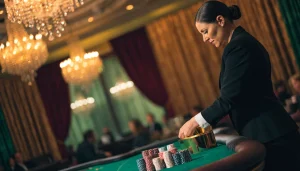
In a live blackjack game, the dealer is not an animated figure generated by software. A human dealer appears on a real-time stream, handling physical cards from a standard deck while the game unfolds. The distinction is simple, but it changes the character of the encounter: the dealer is present as a person, not merely represented by a sequence of symbols on a screen.
That presence gives the game a small theatre of its own. Cards are dealt in view of the camera, and the dealer’s gestures become part of what players watch. There is a person at the centre of the action, carrying out a familiar task in a studio while participants follow remotely. The cards are real; the distance is not. A screen is still a screen.
The arrangement borrows from the social shape of a casino table without reproducing the room around it. The dealer remains the focal point, while people who may be nowhere near one another share the same streamed table. In that sense, the live version is neither simply a digital game nor a visit to a casino. It is a mediated meeting, with the dealer’s work connecting the two sides.
Chat can add a further thread of contact. Some live blackjack games let participants communicate with the dealer and with other players through chat features. That does not turn the stream into a conversation among friends, and the exchange may be brief. Still, it gives the table a social dimension that an entirely automated presentation does not have. A message can acknowledge the person dealing, or register that other people are watching the same round.
Keno Online Casinos in the UK: Draws and Odds
The dealer’s role is therefore both practical and symbolic. Practically, the dealer handles the cards and conducts the visible action. Symbolically, the dealer makes the game legible as a shared event: there is someone doing the dealing, and the cards arrive through that person’s hands. The interface may carry the mechanics of remote participation, but the human figure supplies the point of attention.
This helps explain why “live dealer” describes more than a camera pointed at a game. The stream depends on a human being carrying out the dealing in real time, with physical cards rather than a purely digital representation. The difference is not a guarantee of greater fairness or better outcomes; it is a difference in how the game is presented. The underlying attraction is immediacy, not magic.
There is a quiet oddity in the arrangement. A traditional table gathers people around a dealer; the online version sends the dealer outward to people in separate places. The social centre travels, while the audience remains dispersed. Chat can narrow that distance a little, though it cannot make the room shared.
For some players, seeing a dealer handle cards may make the proceedings feel more tangible than watching a computer-rendered table. For others, the human presence is simply part of the format. Neither response changes what the stream is: a live performance of dealing, carried to a remote screen. The dealer is not an ornament added to the game. The dealer is the reason it looks and feels live.
And the cards are physical.
Blackjack Sites: The Details Behind the Interface
A live blackjack site has two jobs on one screen: show a game taking place in a studio and provide a way to place bets while it unfolds. The dealer and table occupy the visible scene; the betting interface sits alongside it, translating a physical game into choices made through buttons and marked areas. The arrangement is more than decoration. It determines how clearly the online table can be read.
The screen is a small piece of theatre with a control panel attached. A human dealer appears in a real-time stream, while the player acts through the digital layer. That split can feel seamless when the table remains easy to watch and the betting controls are plainly visible. It can feel less so when visual clutter makes the two parts compete. The best blackjack casino sites are therefore not necessarily the most elaborate. A restrained interface may serve the game better than a crowded one.
Live Dream Catcher Casino UK: Game and Site Guide
The same distinction matters when comparing blackjack casino sites in the UK. A site may present a live table as the centre of the screen, or give more space to menus and controls. Those choices affect the character of the session without changing what the game is. A compact display can keep attention on the dealer; a more expansive layout can make the controls prominent. Neither arrangement is automatically superior. The useful question is whether the stream and the betting area remain legible together.
This is where the phrase “online blackjack” can conceal an important difference. A digital table may be represented by graphics, while a live table shows a studio and a person dealing. The interface does not replace that physical scene; it provides the means to participate in it. A well-presented site makes the relationship between the visible table and the on-screen betting area understandable, rather than asking the eye to keep hunting between them.
Presentation also shapes the feeling of agency. The dealer handles the cards, but the player’s decisions enter through the interface. That division is a small portrait of modern gambling: human ritual on one side of the screen, software-mediated choice on the other. The felt, cards and dealer lend the game a recognisable social form; the controls turn that form into an individual activity conducted from elsewhere. The technology is not invisible. It is simply arranged to look ordinary.
For anyone weighing up blackjack online casino sites, consistency across the screen matters more than ornamental polish. Labels, buttons and table markings should be readable in the context of the stream. If the controls are visually detached from the game, the experience can feel like operating a form while watching something else. If they sit naturally beside the table, the two layers make sense as parts of one session. Clear design does not promise a better result. It makes the available action easier to follow.
Keno Payouts vs Fast Casino Withdrawals in the UK
There is no meaningful universal ranking of the best blackjack online casino sites based on appearance alone. Screens differ, and what feels clear on one device may feel cramped on another. A site’s interface can be judged by a modest standard: does the live scene remain visible, and is the betting area understandable without turning the screen into a puzzle? This is a matter of presentation, not a claim about the chances of winning or the quality of a hand.
The interface is the quiet architecture around the table. When it works, attention can stay with the game rather than the machinery that connects it to the screen. When it does not, the machinery announces itself. That is the difference.
The Aim of Blackjack—and Why No System Guarantees a Win
Blackjack gives each hand a narrow purpose: finish closer to twenty-one than the dealer, without exceeding it. That is the whole contest in miniature. A player does not need to produce a perfect hand or reach twenty-one exactly; the aim is to beat the dealer while staying at or below that total. In a casino, the cards make the decision visible, but they do not make its outcome controllable.
That distinction matters when considering how to win at blackjack. A hand can succeed, and a run of hands can go well, but neither establishes a dependable method for future rounds. The game retains a house edge: over time, its terms favour the casino rather than the player. Individual results can vary, sometimes sharply, while the underlying advantage remains. A lucky stretch is a result, not evidence that the next one has been arranged in its favour.
This is where staking systems acquire their appeal. Martingale, for instance, is built around increasing a stake after a loss, with the hope that a later win will recover earlier losses and leave a small gain. The arithmetic can look tidy when described without limits or interruptions. Real money is less accommodating. A sequence of losses can make the required stake grow, and a later win does not erase the possibility that the accumulated cost has become difficult to recover. The system changes the size of the bets; it does not remove the house edge.
No staking pattern can guarantee a winning session. A plan for distributing money may shape how long play continues or how much is risked on a particular hand, but it cannot turn uncertain outcomes into certain ones. Nor does a previous loss create an obligation for the game to repay it. Blackjack has no memory that can be negotiated with.
Staking Systems
No staking pattern can guarantee a winning session or remove the house edge, and increasing stakes to recover losses can lead to significant financial risk.
The social attraction of systems is understandable. They offer a sense of order in a game where decisions are made one hand at a time, and where a sequence of losses can feel like a problem waiting to be solved. Yet a method can be orderly and still expose its user to loss. Confidence is not a wagerable asset.
A more sober approach starts before play: set a budget and keep within it, rather than increasing stakes to chase losses or winnings. If the set amount is gone, continuing does not improve the logic of the game; it only adds more money to an uncertain outcome. The point is not to make every session end in a loss, but to recognise that no system can promise the opposite.
Blackjack’s compact objective can make it seem like a puzzle with a final solution. It is not. The aim is to beat the dealer without going over twenty-one; the larger aim, for anyone choosing to play, is to keep the financial risk within limits that remain acceptable even when the hand goes badly. This material is for entertainment only, not gambling advice.
The edge remains.
Side Bets and Bet-Behind: What Live Blackjack Can Add
A live blackjack table may offer wagers beyond the standard bet on a hand. Side bets and Bet Behind are two such options, but they do different things: one adds a separate wager, while the other lets someone stake money in connection with a hand being played at the table. Their presence changes the choices available, not the basic character of blackjack.
Classic Slots Online in the UK: Free Play and Real Money
A side bet is an optional wager offered alongside the main one. Its condition is separate from the ordinary contest at the table, and the specific condition depends on the game. That distinction matters: a side bet is not simply a larger version of the main wager. It has its own terms, which determine what needs to happen for it to win and how it is settled.
The extra choice can make the table feel busier, particularly when several wagers appear together on screen. But more choices do not automatically mean better value. A side bet can attract attention because it offers a different outcome to watch, yet its appeal is not evidence that it is favourable. The terms, rather than the animation or prominence of a button, define what is being risked.
Bet Behind serves another purpose. It allows a player to place a wager on a hand at the table without taking the main seat for that hand. The arrangement is still part of the live game, but the wager is associated with another player’s participation. In that sense, it offers a way to join the action from the sidelines. A modestly theatrical name for a distinctly practical arrangement.
Side bets and Bet Behind are optional layers that change the available choices at a table, but they are not required to participate in the ordinary game of blackjack.
The table’s rules determine how Bet Behind works in a particular game, so the label alone is not enough to establish its conditions. The available choices may vary between tables, and the screen should make clear which hand a wager relates to and what terms apply. If those details are not immediately clear, the additional option is not especially useful; it is simply another button.
For a UK blackjack casino game, these features are best understood as optional layers rather than essentials. Neither side bets nor Bet Behind are required to take part in the ordinary game. They may suit different preferences: one adds a separate outcome to follow, while the other allows a wager linked to a hand being played by someone else. That is a distinction in format, not a promise of a different result.
There is also a small social shift. The standard table centres attention on the person taking a hand; Bet Behind makes room for people who want to participate without occupying that role. A side bet, meanwhile, draws attention to a condition beyond the main wager. Both can widen the table’s activity, but neither removes the uncertainty that belongs to gambling.
The sensible approach is to treat each extra wager as its own decision. Check its terms before placing it, keep it within a pre-set budget, and do not use additional options to pursue losses or stretch a session beyond its limits. In a live setting, choice arrives neatly labelled. Its consequences remain less tidy.
Live Blackjack in the UK: The Real-Time Format
Live blackjack occupies an uneasy middle ground between a casino floor and a screen. The cards are part of a physical game, while the audience is elsewhere, watching a real-time stream and placing bets through an online service. The dealer is human, not an animation generated to resemble one. That distinction changes the character of the game, even when its familiar aim remains the same.
The format turns a private screen into a small window on a shared event. A dealer’s movements are visible as they happen; the game does not simply calculate an outcome and display it afterwards. Players can also interact with the dealer. The result is a form of online blackjack that borrows the theatre of a casino table without transporting its audience into the room.
Fastest Payout Online Casinos in the UK: Evidence
There is something revealing in that arrangement. Casinos have long depended on more than the mathematical outcome of a hand: ritual, attention and the presence of other people help make the event feel consequential. Live streaming carries some of that social architecture into domestic space. The dealer remains at the centre, while players join from separate locations, connected by the same unfolding game.
This is not the same as sitting beside other players in a conventional venue. The encounter is mediated by a camera and an online platform, and the sense of company is necessarily partial. Still, the dealer’s presence gives the game a human point of reference. A digital version may reproduce the rules, but a real-time broadcast shows a person conducting the game as it develops. The distinction is plain enough.
For people looking at a Blackjack casino in the UK, “live” therefore describes more than a visual style. It identifies a format in which a human dealer and a remote audience meet through a stream. The game remains online, but its action is presented as an event taking place in real time rather than as a sequence produced entirely by software.
The legal setting matters too. Online gambling in the UK is lawful only through operators holding the relevant UK Gambling Commission licence. That requirement places live blackjack within a regulated market when it is offered legally to British players. A camera can make a game look immediate; regulation determines whether the operator is entitled to offer it.
The format’s appeal lies in that combination of distance and presence. The players are not gathered around one table, yet the table is not merely an abstract graphic. It is a broadcast scene, with a dealer visible and available for interaction. The screen does not remove the human element. It relocates it.
A small theatre, at a distance.
Blackjack Rules: The Hand, the Dealer and 21
The central rule in casino blackjack is a comparison: a player’s hand is measured against the dealer’s, with the aim of finishing closer to 21 without exceeding it. The number is both a target and a boundary. Reaching it is not the only route to success; a lower total can still serve if it beats the dealer’s hand.
Jackpot Mobile Casinos in the UK: How Prizes Work
That makes the game less like collecting points without limit and more like negotiating a line. A hand has value only in relation to the limit and the opposing total. Going beyond 21 defeats the player’s basic aim, even if the total might otherwise look impressive. The game’s small arithmetic problem is therefore also a problem of restraint.
The dealer is not a backdrop. The player is trying to beat that hand, rather than simply produce a total that seems strong in isolation. A total below 21 is not automatically enough: its significance depends on the dealer’s result. Nor does the objective require reaching 21 exactly. The rule leaves room for a hand to win by being nearer the target while remaining within it.
This is the foundation of blackjack rules at a casino, including in the UK: keep the hand at 21 or less and finish ahead of the dealer. The broad aim is straightforward, though a particular table’s rules govern the details of how a round is run. The distinction matters. The objective describes what the player is trying to achieve; table rules describe the conditions under which that contest takes place.
Blackjack’s vocabulary can make the game sound like a contest against a number. In practice, 21 is the measure, while the dealer supplies the comparison. The player’s total is not judged in a vacuum. A hand that stays within the boundary has met one condition, but beating the dealer remains the purpose.
There is a quiet economy to the design. One limit gives the hand a ceiling; one opponent gives it context. Without the dealer, the task would be to reach or approach a number. Without the ceiling, it would be a contest of accumulation. Blackjack combines both, and the player’s task sits between them: make a hand that stays under the line and outranks the dealer’s.
For anyone encountering blackjack rules in a casino for the first time, this is the part to hold onto before the finer wording on a table is considered. The game is not about chasing the largest possible total. It is about a total that remains within bounds and beats the dealer. Simple, but not generous.
French Roulette Online Casinos in the UK: Rules
Playing Live Blackjack at a Slower Pace
A live blackjack session keeps time differently from a digital game. The dealer’s movements, the handling of physical cards and the rhythm of the table make each round take longer. There is less of the instant reset familiar from a fully digital version, where one hand can give way to the next with little pause. The delay is part of the format, not a technical fault.
That pace changes the shape of a session. A player has more time between decisions, but fewer rounds pass in the same stretch of time. Live play can feel more deliberate and more social, though it does not become less dependent on chance simply because the cards are visible. The table proceeds according to its own rhythm. It cannot be hurried by tapping the screen.
There is a practical cost to that slower tempo: live tables tend to have higher minimum bets than digital games. That can make a session’s pace and its financial commitment feel closely linked. The table may move slowly, but the stake still applies each time a bet is placed. A budget set before play gives the session a boundary; chasing losses or extending play beyond that boundary can turn a measured evening into something less measured.
The stream also depends on a stable internet connection. If the picture freezes or the connection drops, the live table becomes difficult to follow at precisely the moment when timing matters. A reliable connection is therefore part of the playing conditions, rather than a minor convenience. Playing on a screen does not remove the ordinary requirements of being present.
This is one distinction between live and digital blackjack: the former asks for patience as well as attention. The dealer sets the tempo, and the connection carries it into the room. No machine-like succession of hands. Just the table, moving at human speed.
Free-play blackjack can offer a way to become familiar with an online interface, but it does not provide real payouts or winnings. It is a rehearsal, not a cash session. That difference matters when the appeal of live play lies partly in its real-time setting: a practice version can imitate the layout, but it cannot reproduce the financial stakes of a live game. The slower pace remains the defining practical feature, while the connection and chosen budget determine whether that pace stays manageable.
Before Starting Live Play
- Set a budget in advance to keep gambling within a chosen limit
- Verify a stable internet connection to avoid stream interruptions
- Check the table’s minimum stake to ensure it fits the planned budget
- Review the specific table rules and limits in the game display
Blackjack Bonuses: Read the Wagering Terms First
A blackjack casino bonus can look relevant because it is advertised by a casino that offers live tables. That does not mean the bonus can be used there, or that a hand at a live table will make much progress towards its wagering requirement. The offer’s headline and its conditions are separate things.
A specialist review of UK welcome offers reports that many are built around free spins on slots, which cannot be used at live tables. This is a description of the offers covered by that review, not a rule applying to every operator. A live blackjack table may sit outside the offer altogether, even when the same casino provides both slots and dealer-led games.
Where live play is eligible, its contribution may be weighted well below the amount staked. A stated weighting of 10%, for instance, means only a small part of an eligible wager counts towards the wagering requirement. The rest does not advance that requirement. The figure is an example of a possible term, not a standard rate across blackjack casino bonus offers.
The wording matters. Conditions may identify eligible games, set different weightings by game type, or restrict how bonus funds can be used. A casino blackjack bonus may therefore have one set of conditions for slots and another for live blackjack. If a live table is excluded, playing there does not turn an unusable offer into a usable one.
A no-deposit offer needs the same scrutiny. The label alone does not establish that it applies to live blackjack; eligibility and any wagering conditions are determined by the offer terms. This is true whether an offer is described as a blackjack bonus or as a broader casino promotion.
Before opting in, the terms should be checked for wagering requirements, game weighting and maximum bet limits. A bonus is not extra certainty: it comes with conditions, and wagering through them can involve losses. A budget set before play should remain the boundary, rather than shifting in response to bonus progress.
Progressive Jackpot Slots: How the Pools Grow
For entertainment purposes only; this section is not gambling advice.
Blackjack Table Limits and the Cost of Going Live
The cost of a live blackjack session begins before the first card is dealt: at the table’s minimum stake. A specialist casino review has reported live roulette and baccarat tables with entry stakes around 20p, while blackjack tables can require more to join a hand. That comparison is a reported snapshot, not a fixed tariff across every casino. Limits vary by table, and a figure seen in a review may not describe the current offer.
For anyone comparing an online casino with blackjack against other live games, the minimum is more than a small line of interface text. It determines how much of a balance is committed each round and how quickly a session can become expensive. A higher starting point leaves less room to make small, measured stakes; the table’s pace does not make that cost disappear.
This is one reason a live blackjack casino site should be assessed by its displayed table limits, not just by the presence of a live dealer. A casino with blackjack may offer several tables, but the relevant question is whether the available minimums fit a planned budget. The comparison is practical rather than glamorous.
A budget set before play gives the session a boundary. If the lowest available stake sits beyond it, that table is not a suitable choice, whatever its presentation. Table limits are not a measure of quality; they are a condition of access. The felt may be digital, but the threshold is real.
Before joining, the table’s limit and rules should be checked in the game display. A minimum stake is not the same as a recommended stake, and a higher limit does not improve the chance of a favourable result. It simply changes the amount at risk each time a hand is played. A modest distinction, with consequences.
Games

Aviator Casino Game UK: Licensing and Play
A guide to the UKGC divide, crash-game play, bonus terms and payment considerations around Aviator....

3-reel slots in the UK: how online play works
Three-reel games echo older machine formats, but online play operates within a regulated market and...

Five-Reel Slots in the UK: Free Play and Features
Five-reel layouts, demo play, bonus features and session costs are considered alongside a brief comparison...

Bonus Buy Slots in the UK: How the Feature Works
A bonus buy enters a slot’s bonus stage directly, while the game’s own bonus rules...

Keno Payouts vs Fast Casino Withdrawals in the UK
Keno’s return figures describe the game’s long-run structure, while withdrawal timing is separate from the...

First Deposit Bonus Casinos in the UK: How Offers Work
A first deposit is your own money; any welcome promotion is separate and follows the...

High-Volatility Slots in the UK: How They Work
Volatility describes how often wins arrive and how large they tend to be, but it...

Keno Online Casinos in the UK: Draws and Odds
Keno pairs a numbered card with a separate random draw; game variants, payouts and play...

Live Casinos in the UK: How Tables and Offers Work
Live casino play combines a filmed physical table with software for wagers, choices and outcomes,...

Low-Volatility Slots UK: How Their Payouts Work
Low volatility describes a pattern of smaller, more frequent wins, but it cannot predict a...

Online Slots Payout Percentages: How They Work
A game’s return depends on its rules and paytable, while volatility and individual results answer...

Progressive Jackpot Slots: How the Pools Grow
See how wagers feed progressive pools and how jackpot routes, game availability, RTP and bet...

Best RTP Casino Slots UK: What the Figures Mean
RTP describes a theoretical long-run return, while volatility and session length shape how results may...

Video Slots in the UK: How Online Play Works
Explore how screen-based reels, symbols and software combine to determine slot outcomes and shape the...

Casino dice games in the UK: how online play works
Digital dice games link a stake to a defined random outcome, while the display may...

Chicken Road Game in UK Casinos: What to Know
The article considers how casino labels, availability and game formats shape what can reasonably be...

Classic Slots Online in the UK: Free Play and Real Money
See how demo play introduces reels and controls, and how it differs from the conditions...

Crash Casino Games in the UK: Rules and Play
The guide explains licensing context, casino advantages, game verification, demo limits, payments and the terms...

Crazy Time Live Casino Game Show in the UK
The guide distinguishes the studio stream from digital controls and examines casino conditions, roulette, demos,...

Deal or No Deal Casino UK: How the Slot Works
Follow the game from opening cases to the final decision, and see what can—and cannot—be...

Fastest Payout Online Casinos in the UK: Evidence
A quick game result and a completed casino withdrawal are separate events, and the available...

French Roulette Online Casinos in the UK: Rules
French roulette’s zero rules affect eligible bets, while table pace, format and bonus terms shape...

Fruit Machine Slots in the UK: How Digital Reels Work
A guide to the shift from pub cabinets to software-led games, including reels, randomness, bonuses...

Hi-Lo Casino UK: How the Game Works
Hi-Lo turns a visible card into a prediction, while draw, live and reel formats can...

Highest RTP Slots in the UK: How Returns Work
A practical explanation of theoretical returns, volatility and why a published percentage cannot predict an...

Jackpot Mobile Casinos in the UK: How Prizes Work
Progressive, fixed, must-drop and network jackpots work differently, and their prize structures sit alongside UK...

JetX Casino Game in the UK: How It Is Classified
JetX is often discussed alongside slots, but a category label alone does not explain its...
Live Baccarat Online Casinos in the UK: What to Check
See how live baccarat differs from digital games, and what to consider about table limits,...

Live Dream Catcher Casino UK: Game and Site Guide
A clear look at the streamed dealer format, game mechanics and the limits of what...

Live Casino Lightning Roulette in the UK: Rules and Play
The guide covers UK licensing, live-dealer play, roulette odds, demo limits and the differences between...

Live Roulette UK: How the Live Table Works
Live roulette streams a dealer and physical wheel, while digital betting controls and game mechanics...

Mines casino game in the UK: play and licensing
A guide to free play, casino offers, randomness and the UK licensing line around online...

Monopoly Live Casino UK: How the Live Format Works
A practical guide to streamed play, roulette mechanics, demo limits and the bonus conditions that...

Online Bingo UK: Formats, Tickets and Slot Offers
A guide to bingo formats, prize structures, free play and how slots fit into UK...

Online American Roulette in the UK: How It Works
The extra 00 sets American roulette apart, shaping the wheel layout, bet outcomes and the...

European Roulette at UK Online Casinos: How It Works
A practical guide to single-zero roulette, from bet types and online formats to bonuses and...

Online Casino Games for Real Cash in the UK
A clear guide to how real-money spins work and why a displayed win, a bonus...

Online Casino Tournaments UK: Entry and Rules
Tournament terms distinguish no-cost entry from ticketed or paid access, while scoring, prizes and opt-in...

Online casinos without ID in the UK: what it means
The label may describe when or how documents are requested, but it cannot remove identity...

Penny Slot Machines in the UK: Stakes and Play
A practical guide to minimum spin costs, practice play, RTP, bonus terms and checking which...

Plinko Casino in the UK: Rules, Offers and Payments
Plinko is a game category, but an operator’s UKGC status shapes its regulatory position, while...

Progressive Slots Online in the UK: How Jackpots Work
Progressive jackpots grow through contributions from qualifying wagers, with the displayed pool changing as connected...

UK Casino Slots: Licensing, RTP and Bonus Terms
A practical guide to licensing, slot odds, bonus conditions and the checks that matter before...
































































































































































































































































