
European Roulette at UK Online Casinos: How It Works
 Available in GB
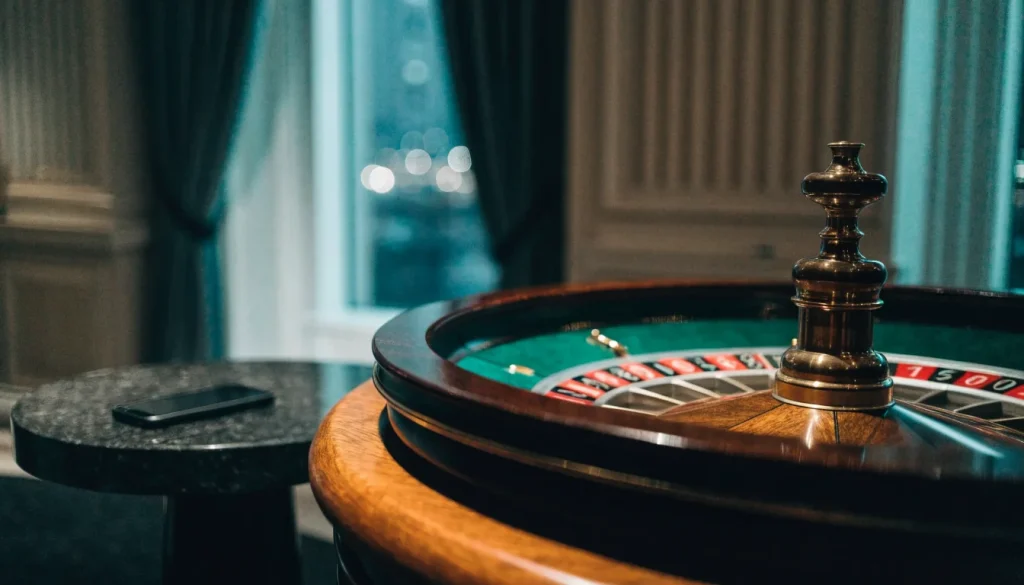
A practical guide to single-zero roulette, from bet types and online formats to bonuses and the difference an extra zero makes.
Table of Contents
- The European Wheel: Thirty-Seven Pockets, One Zero
- What “Best” Means When the Wheel Is the Same
- Reading the Bets: From a Single Number to Red or Black
- A Wheel on Screen: RNG Roulette and Low-Stake Tables
- The Single-Zero Layout—and the Temptation of a System
- Free Spins, Real Money and the Fine Print on Bonuses
- The Table Layout: Where Zero Meets the Bets
- Roulette in a Slot’s Clothing
- The Live Dealer and the Physical Ball
- European, American and the Cost of an Extra Zero
- Games
The European Wheel: Thirty-Seven Pockets, One Zero
European roulette begins with a simple piece of arithmetic: the wheel has thirty-seven pockets, numbered from 1 to 36, plus one green zero. That extra pocket is not decoration or a pause between the numbered spaces. It is the feature that shapes the game’s mathematics. The wheel presents a compact world in which the numbered outcomes share space with a result that belongs to neither side of the ordinary count.
The ball’s arrival in a pocket settles each spin. Before it does, the wheel offers no memory of what came before. A number that appeared on the previous spin is not thereby used up; one that has been absent is not owed an appearance. The wheel does not keep an account. Its apparent sequences can invite interpretation, but each result is determined by chance, not by a pattern that can be read from earlier outcomes.
That matters because a roulette wheel is both a physical object and a system of rules. Its movement gives the game its visible drama: a turning wheel, a moving ball and a moment of uncertainty. Its pocket count supplies the less theatrical part, the arithmetic. European roulette’s single zero makes its structure distinct, and the house edge attached to that structure is 2.70%. The figure describes the game’s mathematical advantage for the operator over time, not a prediction of what will happen in any particular session.
The distinction between a long-run measure and an individual result is easy to lose in the rhythm of play. A run of spins feels like a story: one outcome follows another, and the mind naturally searches for a plot. But the house edge is not a force that announces itself on every spin. It is a statistical feature of the game as a whole. Short stretches can depart sharply from what expectation suggests; the underlying advantage does not need to appear on schedule.
Online Casino Tournaments UK: Entry and Rules
There is something revealing in the way roulette makes that advantage visible. The numbered pockets are the game’s apparent centre, but the green zero occupies a separate role. It adds an outcome without joining the numbered sequence. The wheel therefore offers more than a set of possible destinations: it encodes a boundary between the familiar count and the house’s mathematical position. The arrangement is elegant, and its consequences are not neutral.
This is the baseline for European roulette online as well as for the traditional wheel. A screen can change how the game is presented, but the defining structure remains the same when the version shown is European roulette: 36 numbered pockets and one zero. The essential question is not whether the wheel is made of wood, metal or pixels. It is which wheel the game represents, and what rules govern the result. A digital image may soften the machinery; it cannot make the zero disappear from the arithmetic.
That is why the phrase “European roulette” carries more meaning than a visual style. It names a particular wheel structure and the house edge that follows from it. In an online casino, the label is useful only insofar as the game’s rules match that structure. The title on a screen can be brief; the distinction beneath it is exact. Thirty-seven pockets, one of them zero.
The figure of 2.70% should be read with care. It does not mean that a player loses that precise share of every amount during every session, nor does it set a timetable for losses. It expresses an advantage built into the mathematics across repeated play. Individual outcomes remain uncertain, and chance can produce results that do not resemble the long-run expectation. Statistics are patient. A session is not.
European roulette features 37 pockets (1–36 and one zero), resulting in a house edge of 2.70%.
This gap between the formal rule and the felt experience is part of roulette’s enduring appeal. The wheel turns in public view, yet its next result remains unknown. The zero is plainly present, but it can be easy to treat it as an exception rather than as a central element of the design. In fact, it is precisely the feature that makes the European wheel what it is. The game’s simplicity is real; so is the arithmetic beneath it.
For anyone encountering European roulette in a UK online casino, the useful starting point is therefore not a promise of strategy or a list of lucky numbers. It is the wheel itself: 37 pockets, including a single zero, with a house edge of 2.70%. Everything else depends on understanding what that structure does—and what it cannot tell anyone about the next spin.
Chance keeps its counsel.
What “Best” Means When the Wheel Is the Same
When choosing an online casino for European roulette in the UK, it helps to consider practical details alongside the game itself. This list provides a quick reference to the payout speed noted for each operator.
1. NightLuck
Payout speed: 1-3 business days NightLuck lists a payout speed of 1–3 business days, a useful detail to consider when choosing where to play European roulette.
2. Dieselwin
Payout speed: 1-3 business days Dieselwin lists a payout speed of 1–3 business days. This is the available practical detail for players considering it for European roulette.
3. Jetsetspins
Payout speed: 1-3 business days Jetsetspins lists a payout speed of 1–3 business days, giving players a clear timeframe to bear in mind.
4. Chanze
Payout speed: 1-3 business days Chanze lists a payout speed of 1–3 business days. That payout information is the key detail available for this reference card.
5. SpinFormula
Payout speed: 1-3 business days SpinFormula lists a payout speed of 1–3 business days, a practical point to consider when looking at its European roulette offering.
6. WinBeast
Payout speed: 1-3 business days WinBeast lists a payout speed of 1–3 business days. Players can use this stated timeframe as one factor in their choice.
7. BeOnBet
Payout speed: 1-3 business days BeOnBet lists a payout speed of 1–3 business days, providing a clear practical detail for prospective players.
8. EvoSpin
Payout speed: 1-3 business days EvoSpin lists a payout speed of 1–3 business days. This is the available factual point to consider for European roulette players.
9. Revery Play
Payout speed: 1-3 business days Revery Play lists a payout speed of 1–3 business days, which may help players set expectations around payouts.
10. NightWin
Payout speed: 1-3 business days NightWin lists a payout speed of 1–3 business days. This stated timeframe is the main available detail for players considering it.
A roulette wheel does not improve because its table is dressed in gold, its dealer has a polished voice or its lobby gives the game a prominent place. For a British player comparing European roulette, the useful differences lie around the wheel: whether the rules and return information are easy to find, whether the table works at a suitable pace, and whether the operator treats regulation as part of the service rather than fine print.
“Best” is therefore a question of fit, not a universal title. One platform may make game information easy to inspect; another may offer a more legible interface or a choice of table formats. A ranked list can arrange operators by stated criteria, but it cannot settle which one suits every player. The same game can feel quite different in a cluttered lobby, or when essential information is buried several clicks away.
RTP is one detail worth finding before play. The game information should make the theoretical return to player accessible, so it can be compared with the rules of the particular roulette product. RTP describes a long-run mathematical expectation, not a forecast for an individual session and not a promise about what any player will receive. Its value is less mysterious when displayed beside the game than when left to be reconstructed from promotional language. A platform that makes the figure difficult to locate has made comparison harder, whatever its other attractions.
The rules deserve the same plain treatment. The table should identify the roulette version and explain any special conditions that affect play. European roulette rules are not an interchangeable label for every product containing a wheel: a conventional table and a slot-style game can use the word “roulette” while offering different experiences. That distinction belongs in the game description, not in the player’s post-session archaeology.
In Great Britain, the UK Gambling Commission (UKGC) regulates online casino activity and is the sole regulator. Remote operators offering gambling to British customers must hold the relevant UKGC licence, wherever the business is based. Real-money online gambling is legal in the UK only through licensed and regulated sites; a platform without a valid UKGC licence cannot legally offer real-money live roulette to British residents. A foreign address does not move the service outside the rules governing its British market.
Online casinos without ID in the UK: what it means
The licence is not a decorative seal. Before allowing a customer to deposit, an operator must verify their age. UK gambling is for adults aged 18 and over, but the age restriction is meaningful only if it is checked before money enters the account. The UKGC public register is the place to verify an operator’s licence details before depositing. Names and logos can be copied; a register is less susceptible to theatrical confidence.
A UKGC-licensed live casino must also provide practical controls, not merely a page about responsible gambling. These include deposit limits, loss limits, session time reminders, reality checks, cool-off periods and GamStop self-exclusion. New customers must be prompted to set a financial limit before their first deposit, with account-level limit controls accessible afterwards. The controls matter because gambling is not experienced as an abstract probability while a session is under way. It is experienced as time passing, decisions accumulating and money becoming less legible.
Licensing
Real-money online gambling is legal in the UK only through licensed and regulated sites; a platform without a valid UKGC licence cannot legally offer real-money live roulette to British residents.
There are further signs of a functioning regulatory system. UKGC licensees must provide an internal complaints process and access to an approved Alternative Dispute Resolution service. They must also offer self-exclusion and contribute to the Research, Education and Treatment levy. These duties do not make a platform generous; they establish what a regulated operator is expected to do. A complaint route that can be found before there is a complaint is a modest but telling measure of how an organisation understands its obligations.
The table itself may be identical elsewhere. The institution around it is not. In Britain, regulation puts a boundary between a product that is merely available online and one that can lawfully serve the local market. That is the more useful starting point for judging a roulette platform: clear game information, accessible RTP, and protections that exist in the account rather than only in the small print. No velvet required.
Reading the Bets: From a Single Number to Red or Black
Roulette offers a choice between concentrating a stake on a narrow outcome and spreading it across a broader group. The payout reflects that choice: a wager covering fewer numbers returns more if it wins, while wider bets pay less. Learning the terms makes a table easier to read, whether the game is played for practice or for real money.
A straight-up bet selects one number. It pays 35:1, meaning the stated winnings are thirty-five times the stake; the original stake is also returned on a winning bet under the usual meaning of payout odds. The same straight-up return applies on European and American roulette. It is the most concentrated wager available, with the longest odds among the bets described here.
A split covers two neighbouring numbers and pays 17:1. A street covers a horizontal row of three numbers and pays 11:1. Both are inside bets: they focus on a small patch of outcomes rather than a broad characteristic such as colour or parity. Their returns sit between the single-number payout and the even-money choices.
| Bet | What it covers | Payout |
|---|---|---|
| Straight-up | One number | 35:1 |
| Split | Two adjacent numbers | 17:1 |
| Street | A horizontal row of three numbers | 11:1 |
| Red or black | One colour | 1:1 |
| Even or odd | One parity | 1:1 |
| High or low | One half of the number range | 1:1 |
The outside bets are red or black, even or odd, and high or low. Each pays 1:1. They are often described as simpler choices because they cover broad categories rather than particular numbers; the smaller return follows that wider coverage. They are still wagers on the result of a spin, not a way to make its outcome predictable.
The payout ratio is not a measure of how likely a bet is to win. It describes what the bet returns when it does. That distinction matters when a large figure beside a single number seems to promise a dramatic result: the reward is larger precisely because the wager covers less.
For someone learning how to play European roulette, the practical first step is to recognise the bet labels and match each one to its coverage. A straight-up selection is a single number; a split joins two adjacent numbers; a street groups a row. Red and black, even and odd, and high and low sit apart as outside bets. The labels tell the story before a chip is placed.
Straight-up Bet
Example: 35:1 × £1 = £35 winnings plus the return of the original £1 stake.
Practice play, where a casino offers it, can make those distinctions familiar without a real-money stake. The same payout structure is easier to understand once the difference between a bet’s coverage and its return is clear. Bigger odds are not better odds.
A Wheel on Screen: RNG Roulette and Low-Stake Tables
An online casino with European roulette may offer more than one way to put the wheel on screen. In an automated game, software handles the spin; in a live table, a camera carries a physical wheel and a human dealer into the interface. The distinction is not cosmetic. One format is built around rapid, self-contained rounds; the other retains the pauses and ceremony of a room.
RNG roulette uses a random number generator to produce each simulated spin. The result appears on a digital wheel, which presents the familiar European layout, including its green zero, without a ball travelling around a physical rim. The software supplies the event; the animation supplies its visible form. That makes the game quick to enter and easy to fit into a short session, though the screen can make a sequence of results feel more like a continuous performance than separate random outcomes.
The generator is not a dealer working behind a curtain. There is no studio wheel to watch and no human handling the ball: each round is produced by the game software. For some players, that removes the social texture of live roulette; for others, it removes waiting. A digital wheel is a compact piece of theatre.
Speed also shapes the practical difference. RNG games can move through spins faster than a conventional table, and their minimum stakes can be lower. A specialist review reports that UK live roulette table minimums can begin at 10p, while auto-roulette and speed formats sometimes begin at 5p. Those figures describe reported table options, not a promise that every casino with European roulette will offer the same stakes. Table limits can vary, so the amount shown in the game itself matters more than the format’s label.
RNG roulette is also associated with low entry stakes: minimums can be as little as 10p. That makes it possible to try the pace of a digital table without committing to a larger opening wager. It does not change what roulette is, or make a particular result more likely. A small stake changes the scale of a round, not its uncertainty.
Auto-roulette and speed roulette occupy a middle ground in the screen-based catalogue. They keep the automated structure but can give the game a more continuous rhythm than a standard digital table. Their names describe how the round is delivered, not a different kind of wheel. The format may suit players who value brisk turnover, while those who prefer to observe a dealer and a physical ball have a different experience available.
The appeal of a European roulette wheel on screen is partly its familiarity: the layout is recognisable, while the interface makes the process more immediate. But convenience has a pace of its own. Faster rounds can make decisions arrive before reflection catches up. The wheel may be virtual; the money being wagered is not.
RNG Roulette
Software-driven spins using a random number generator for rapid, self-contained rounds.
Live Roulette
A physical wheel and human dealer streamed via camera to retain the ceremony of a room.
Speed Roulette
An automated format that compresses the ritual to allow a higher volume of spins per hour.
A quicker ritual. A real stake.
The Single-Zero Layout—and the Temptation of a System
A European table’s single zero does more than give the wheel its defining shape. It also marks the point where apparently simple wagers meet the casino’s advantage. When the ball lands on zero, bets on red or black, odd or even, and high or low do not win. That interruption is central to the European roulette house edge: across the game, it stands at 2.70%.
The felt presents a tidy order. Numbers occupy the central grid; broader choices sit around it. But the layout can make outside bets look safer than they are. They cover many outcomes, yet zero remains outside those groups and can undo a winning-looking run. Inside bets, by contrast, concentrate a wager on fewer numbers. Neither position changes the wheel’s probabilities. The distinction is about what a stake covers, not a way of influencing where the ball lands.
Some tables soften the effect of zero on even-money bets through La Partage. If the ball lands on zero, half of those stakes are returned, bringing the house edge on those bets down to 1.35%. This is a rule attached to a table, not a property of every single-zero game. French roulette also uses En Prison, and the presence of such rules helps explain why French roulette has the lowest house edge among standard variants. The felt may look familiar; the terms still matter.
That difference is one reason roulette systems attract attention. They promise a pattern where the game offers none, often by changing stake size after each result. The Martingale is the best-known example: after a loss, the next bet is doubled, with the aim of recovering earlier losses when a win arrives. On paper, the sequence has a pleasing symmetry. At a table, losses can keep arriving.
Online Bingo UK: Formats, Tickets and Slot Offers
Each doubling asks for a larger bankroll and a table willing to accept the next stake. A losing streak can put serious pressure on a player’s funds before any recovery occurs. Even a later win does not make the earlier sequence predictable; it merely ends that particular run of losses. The arithmetic scales faster than the reassurance.
There is a social logic to the appeal. A system gives chance the appearance of administration: a rule to follow, a decision already made, a sense that disorder can be managed. Casinos have long offered games in which that feeling is easy to mistake for control. Roulette is especially suited to the illusion because every spin is visibly separate, while memory keeps arranging past outcomes into stories.
No staking progression can forecast the final result. Roulette odds arise from chance, not from a sequence that owes anyone a correction. The single zero sets the game’s baseline; a zero rule can alter the cost of particular bets, but neither a layout nor a system can command the next spin.
A pattern is not a promise.
Free Spins, Real Money and the Fine Print on Bonuses
A free European roulette game and a real-money table may show the same wheel, but the stakes are not the same. In a demo, chips are for practice: wins do not become withdrawable cash, and losses do not come from a gambling balance. Real-money play uses deposited funds, so the table’s minimum stake and the pace of play have a direct financial consequence. The word “free” describes the practice version, not a route to cash.
Attention The word “free” describes the practice version of the game; wins in demo mode do not become withdrawable cash.
Bonus funds add a separate layer. A casino may advertise a welcome offer, but the terms determine whether roulette contributes towards the wagering requirement attached to it. A specialist review reports that roulette’s game weighting can differ sharply by format: live tables may count at 10% or 20%, while RNG roulette may receive full credit. These are not universal terms. The operator’s own conditions state which games qualify, how much each wager counts and whether a particular table is excluded.
That distinction matters because a low contribution rate means a roulette stake advances the requirement only a little. A full contribution rate moves it further, but still does not turn a bonus into cash or remove any withdrawal conditions. Some offers exclude live roulette altogether. The small print does the arithmetic.
A specialist review also reports that, from January 2026, UK rules limit bonus wagering requirements to no more than ten times the bonus amount for licensed operators. That ceiling does not make every offer alike: eligibility, game weighting, expiry conditions and withdrawal terms still depend on the offer. The relevant terms should be read before play, not after a balance has been built around assumptions.
Deposits and limits sit outside the promotional language. Remote operators must ask new customers to set a financial limit before their first deposit and make account-level limit controls accessible. UKGC-licensed casinos cannot accept credit cards for gambling. A deposit is therefore not simply a payment step; it is one point at which the account’s limits and funding rules become concrete.
Online Slots Payout Percentages: How They Work
Practice play can be useful for learning the interface without risking money, but it cannot reproduce the pressure of a real balance or make a bonus easier to clear. A demo also does not establish that the same game contributes to wagering in the real-money version. The game title may match; the terms may not.
For anyone comparing free online European roulette with a cash table, the useful distinction is not merely whether the wheel spins. It is whether the balance is virtual or deposited, whether bonus funds are involved, and what the operator’s rules say about the game’s weighting. Promotions are contracts dressed for a launch.
The Table Layout: Where Zero Meets the Bets
A European roulette table is organised to make several kinds of wager visible at once. The numbered grid occupies the centre of the felt, while broader betting areas sit around its edges. A chip placed directly on a number marks a precise choice; chips set on boundaries can cover adjoining numbers. Outside the grid, larger boxes collect wagers on groups such as red or black, odd or even, and low or high numbers.
The arrangement is practical, but it also makes the table’s central asymmetry hard to miss. The numbered choices sit in a tidy field; zero occupies its own space at the end of that field. It is neither red nor black, odd nor even, high nor low. The outside boxes therefore do not include it. Their apparent breadth has a boundary.
That boundary matters when the ball lands on zero. Under the standard treatment, an even-money wager such as red or black loses. On a table offering La Partage, half of that wager is returned instead. The rule applies to even-money bets, not to every chip on the felt, and reduces the house edge on those bets to 1.35%.
La Partage Rule
This specific rule returns half of even-money stakes if the ball lands on zero, effectively reducing the house edge on those particular bets to 1.35%.
La Partage is often associated with French roulette, but the name describes a rule rather than a different arrangement of the betting areas. The physical logic remains legible: zero interrupts the categories printed around the grid, while the rule changes what happens to certain wagers when that interruption occurs. The felt is not merely a map of numbers. It is a small diagram of what the casino counts as belonging together—and what it keeps outside the group.
A European roulette casino table layout can look crowded at first because the same surface serves wagers with different scopes. A chip on a single square is easy to distinguish from one touching a line or sitting in an outside-bet box. The placement is the wager’s definition; a chip near the intended area is not a substitute for one placed on it.
This is why a supposed European roulette strategy cannot be read from the felt alone. The layout clarifies which outcomes a wager covers, and La Partage changes the treatment of zero for a narrow class of bets. Neither turns the printed categories into a forecast. The table explains the terms. Chance supplies the result.
A neat design. An indifferent ball.
Roulette in a Slot’s Clothing
A search for European roulette can lead to something that looks less like a table and more like a slot game. A 3D European roulette game, or a product labelled Gold or Platinum, may borrow the wheel, numbers or visual language of roulette without being a conventional roulette table. The distinction matters: a familiar green layout does not, by itself, establish that the game uses the same rules or returns.
Chicken Road Game in UK Casinos: What to Know
A table game is organised around wagers placed on a wheel outcome. A slot-style product has its own rules, paytable and presentation, even when roulette supplies the theme. Its name may suggest a variation on European roulette, but the label alone says little about how a round works. The useful question is not whether the graphics include a wheel; it is what the game’s own rules say happens when a particular result appears.
That is why European roulette odds cannot be carried across automatically to a slot with roulette imagery. A conventional European table has defined payouts for its wagers, while a themed slot may use a different structure altogether. The resemblance is visual, not a promise of identical mathematics. Casino design has always been good at borrowing the furniture of one game for another.
Lightning Roulette is a more direct comparison because it remains a roulette game while changing a specific return. A specialist review reports that a straight-up bet without a lightning multiplier pays 29:1, rather than the conventional 35:1. The lightning feature therefore does not simply decorate an unchanged table: the base payout described in that review differs from the standard straight-up return. The same review says outside bets retain standard roulette odds. The detail is worth checking in the rules for the particular game, rather than assuming every wager is altered in the same way.
The distinction also helps separate product names from game types. “European roulette Gold” or “European roulette Platinum” may be a title or themed presentation; neither phrase, on its own, tells how the game calculates results. In a table game, the wheel and betting layout define the play. In a slot-style product, its paytable and instructions do.
A themed roulette slot may borrow the visual language of the table, but its rules, paytables, and returns are governed by slot mechanics rather than conventional roulette mathematics.
The wheel may be borrowed. The rules are not.
The Live Dealer and the Physical Ball
A live European roulette table has a physical wheel at its centre, even when the room around it is a studio and the view arrives through a screen. A dealer sets the ball in motion; the camera follows its fall into a pocket. That small, visible event is the distinction from a computer-generated spin. The interface may look similar, but the result comes from a real wheel and ball rather than an RNG simulation.
The dealer gives the game a human tempo. There is a pause while bets are placed, a call as the wheel turns, then the settling of the ball. Automated tables remove much of that ceremony. Speed roulette compresses it: one specialist review reports that this format can exceed 150 spins in an hour, whereas a standard table in the same review is put at 80–100. Those figures describe reported formats, not a promise about every table. Faster is not necessarily better; it simply leaves less room between decisions.
Live play is not exempt from the rules governing British online gambling. A platform without a valid UK Gambling Commission licence cannot legally offer real-money live roulette to British residents. At a UKGC-licensed live casino, player-protection tools must include deposit limits, loss limits, session time reminders, reality checks, cool-off periods and GamStop self-exclusion. These controls belong to the service, not to the dealer’s discretion.
The wider account safeguards matter, too. Remote operators must prompt new customers to set a financial limit before their first deposit and make account-level limit controls accessible. Age must be verified before a customer is allowed to deposit. The streamed table may feel like a room with its own customs; the account remains subject to the operator’s obligations.
That contrast is revealing. The studio sells presence: a person, a wheel, a ball that can be watched rather than imagined. Regulation insists on something less theatrical but more consequential—limits, reminders and a route away from play. The spectacle is optional. The safeguards are not.
Casino Games: Slots, Live Tables and Online Picks
European, American and the Cost of an Extra Zero
The difference between European and American roulette is small enough to fit in a single pocket, but large enough to change the table’s mathematics. The European wheel has 37 pockets: numbers from 1 to 36 and one zero. The American version adds a double zero, bringing its total to 38. That extra green space is not decorative. It gives the house another route to a winning result.
On European roulette, the house edge is 2.70%. On American roulette, it rises to 5.26%. The figures describe the house’s mathematical advantage over time, not a prediction of what will happen in an individual spin. A run of wins can occur on either layout; the extra pocket changes the long-run balance, not the drama of the next ball.
The broad comparison is straightforward: for the same kind of wager, the American layout is generally less favourable to the player because the added zero creates another losing outcome. Its effect is especially plain on the basket bet, which covers the zero, double zero and the lowest-numbered row. That bet carries a 7.89% house edge on American roulette, higher than the game’s overall edge. The more the wager gathers around the green pockets, the more expensive the layout becomes.
This is why an online European roulette game and its American counterpart should not be treated as interchangeable versions of the same table. Their felt may look familiar, and many bets may carry the same displayed payouts, but the pocket count underneath those bets matters. A payout can appear generous while the probability of collecting it has shifted.
The extra zero is a modest piece of design with an unusually visible consequence. It asks no new skill of the player and makes no spectacle of itself. It simply sits beside the first zero, quietly improving the house’s position. A small green addition. A lasting mathematical difference.
Games

Aviator Casino Game UK: Licensing and Play
A guide to the UKGC divide, crash-game play, bonus terms and payment considerations around Aviator....

3-reel slots in the UK: how online play works
Three-reel games echo older machine formats, but online play operates within a regulated market and...

Five-Reel Slots in the UK: Free Play and Features
Five-reel layouts, demo play, bonus features and session costs are considered alongside a brief comparison...

Bonus Buy Slots in the UK: How the Feature Works
A bonus buy enters a slot’s bonus stage directly, while the game’s own bonus rules...

Keno Payouts vs Fast Casino Withdrawals in the UK
Keno’s return figures describe the game’s long-run structure, while withdrawal timing is separate from the...

First Deposit Bonus Casinos in the UK: How Offers Work
A first deposit is your own money; any welcome promotion is separate and follows the...

High-Volatility Slots in the UK: How They Work
Volatility describes how often wins arrive and how large they tend to be, but it...

Keno Online Casinos in the UK: Draws and Odds
Keno pairs a numbered card with a separate random draw; game variants, payouts and play...

Live Casinos in the UK: How Tables and Offers Work
Live casino play combines a filmed physical table with software for wagers, choices and outcomes,...

Low-Volatility Slots UK: How Their Payouts Work
Low volatility describes a pattern of smaller, more frequent wins, but it cannot predict a...

Online Slots Payout Percentages: How They Work
A game’s return depends on its rules and paytable, while volatility and individual results answer...

Progressive Jackpot Slots: How the Pools Grow
See how wagers feed progressive pools and how jackpot routes, game availability, RTP and bet...

Best RTP Casino Slots UK: What the Figures Mean
RTP describes a theoretical long-run return, while volatility and session length shape how results may...

Video Slots in the UK: How Online Play Works
Explore how screen-based reels, symbols and software combine to determine slot outcomes and shape the...

Casino dice games in the UK: how online play works
Digital dice games link a stake to a defined random outcome, while the display may...

Chicken Road Game in UK Casinos: What to Know
The article considers how casino labels, availability and game formats shape what can reasonably be...

Classic Slots Online in the UK: Free Play and Real Money
See how demo play introduces reels and controls, and how it differs from the conditions...

Crash Casino Games in the UK: Rules and Play
The guide explains licensing context, casino advantages, game verification, demo limits, payments and the terms...

Crazy Time Live Casino Game Show in the UK
The guide distinguishes the studio stream from digital controls and examines casino conditions, roulette, demos,...

Deal or No Deal Casino UK: How the Slot Works
Follow the game from opening cases to the final decision, and see what can—and cannot—be...

Fastest Payout Online Casinos in the UK: Evidence
A quick game result and a completed casino withdrawal are separate events, and the available...

French Roulette Online Casinos in the UK: Rules
French roulette’s zero rules affect eligible bets, while table pace, format and bonus terms shape...

Fruit Machine Slots in the UK: How Digital Reels Work
A guide to the shift from pub cabinets to software-led games, including reels, randomness, bonuses...

Hi-Lo Casino UK: How the Game Works
Hi-Lo turns a visible card into a prediction, while draw, live and reel formats can...

Highest RTP Slots in the UK: How Returns Work
A practical explanation of theoretical returns, volatility and why a published percentage cannot predict an...

Jackpot Mobile Casinos in the UK: How Prizes Work
Progressive, fixed, must-drop and network jackpots work differently, and their prize structures sit alongside UK...

JetX Casino Game in the UK: How It Is Classified
JetX is often discussed alongside slots, but a category label alone does not explain its...

Live Baccarat Online Casinos in the UK: What to Check
See how live baccarat differs from digital games, and what to consider about table limits,...

Live Blackjack Online Casinos in the UK
A closer look at licensing, live table formats, blackjack rules, side bets, bonuses and limits...

Live Dream Catcher Casino UK: Game and Site Guide
A clear look at the streamed dealer format, game mechanics and the limits of what...

Live Casino Lightning Roulette in the UK: Rules and Play
The guide covers UK licensing, live-dealer play, roulette odds, demo limits and the differences between...

Live Roulette UK: How the Live Table Works
Live roulette streams a dealer and physical wheel, while digital betting controls and game mechanics...

Mines casino game in the UK: play and licensing
A guide to free play, casino offers, randomness and the UK licensing line around online...

Monopoly Live Casino UK: How the Live Format Works
A practical guide to streamed play, roulette mechanics, demo limits and the bonus conditions that...

Online Bingo UK: Formats, Tickets and Slot Offers
A guide to bingo formats, prize structures, free play and how slots fit into UK...

Online American Roulette in the UK: How It Works
The extra 00 sets American roulette apart, shaping the wheel layout, bet outcomes and the...

Online Casino Games for Real Cash in the UK
A clear guide to how real-money spins work and why a displayed win, a bonus...

Online Casino Tournaments UK: Entry and Rules
Tournament terms distinguish no-cost entry from ticketed or paid access, while scoring, prizes and opt-in...

Online casinos without ID in the UK: what it means
The label may describe when or how documents are requested, but it cannot remove identity...

Penny Slot Machines in the UK: Stakes and Play
A practical guide to minimum spin costs, practice play, RTP, bonus terms and checking which...

Plinko Casino in the UK: Rules, Offers and Payments
Plinko is a game category, but an operator’s UKGC status shapes its regulatory position, while...

Progressive Slots Online in the UK: How Jackpots Work
Progressive jackpots grow through contributions from qualifying wagers, with the displayed pool changing as connected...

UK Casino Slots: Licensing, RTP and Bonus Terms
A practical guide to licensing, slot odds, bonus conditions and the checks that matter before...
































































































































































































































































