
Mines casino game in the UK: play and licensing
 Available in GB
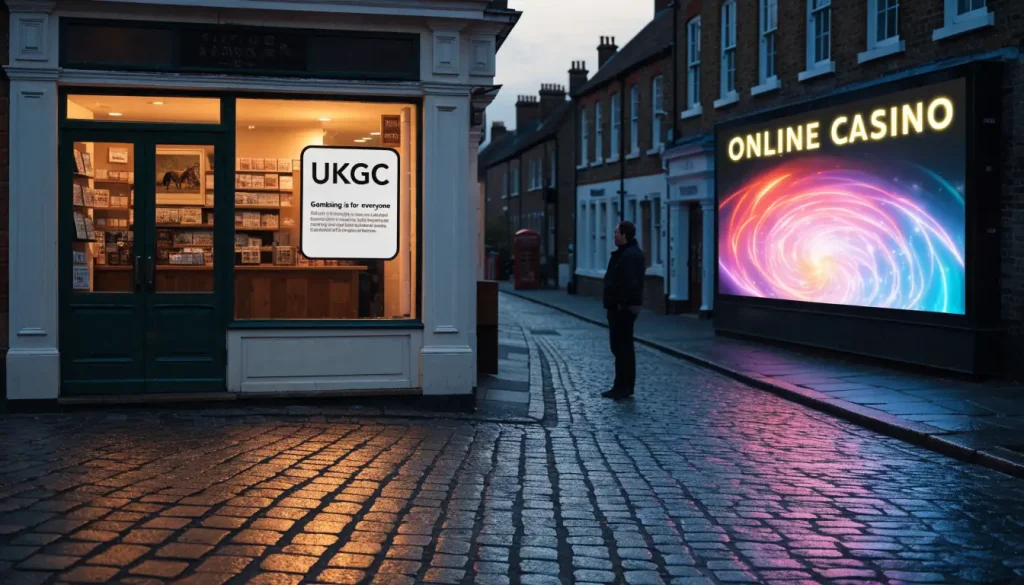
A guide to free play, casino offers, randomness and the UK licensing line around online Mines.
Table of Contents
- Mines Online: A Game in a Divided UK Market
- Free Play, Bonuses and the Meaning of “No Deposit”
- What Casino Game Categories Can—and Cannot—Tell Us About Mines
- Playing Without Mistaking a Rule for a Winning System
- A Demo Is Not a Forecast
- Judging a Casino Offer by Its Terms, Not Its Superlatives
- Patterns, Randomness and the Limits of Strategy
- Real-Money Play and the UK’s Licensing Line
- How Casino Outcomes Work—and Why No Method Guarantees a Win
- A Simulator Can Show Randomness, Not the Future
- Games
Mines Online: A Game in a Divided UK Market
Searching for a Mines casino game online leads into a market that is less unified than its storefronts suggest. A site may be accessible from the UK, present games to British visitors and accept their custom, yet still sit outside the system that regulates gambling here. Availability and UKGC status are different things. The distinction is easy to blur when every platform is arranged as a bright catalogue of games.
A specialist review describes the UK online casino market in 2026 as split between the UKGC-regulated space and offshore platforms outside it. That is a useful map of the competing environments, not a claim that the two have the same legal standing. The word “offshore” describes where an operator sits in relation to the UKGC system; it does not turn that operator into a UK-licensed casino.
Online casino games can be offered where the law permits them. In Britain, remote operators selling into the market must hold the relevant UKGC licence, wherever the operator itself is located. A platform may nevertheless accept UK players while operating outside that regulatory system. This is the crucial distinction behind the phrase “available to UK players”: it describes access, not approval under British gambling rules.
When choosing a UK casino for Mines in 2026, it helps to check practical details alongside the game itself. This list gives a concise reference point for each operator based on the information available.
1. NightLuck
Payout speed: 1-3 business days NightLuck has a stated payout speed of 1–3 business days, a useful detail to consider when assessing a casino for Mines.
2. Dieselwin
Payout speed: 1-3 business days Dieselwin lists a payout speed of 1–3 business days for players considering its casino offering.
3. Jetsetspins
Payout speed: 1-3 business days Jetsetspins has a stated payout speed of 1–3 business days, which may be relevant when choosing where to play Mines.
4. Chanze
Payout speed: 1-3 business days Chanze lists a payout speed of 1–3 business days, providing one practical detail for prospective players.
5. SpinFormula
Payout speed: 1-3 business days SpinFormula has a stated payout speed of 1–3 business days for players weighing their casino options.
6. WinBeast
Payout speed: 1-3 business days WinBeast lists a payout speed of 1–3 business days, a relevant point to note when considering Mines.
7. BeOnBet
Payout speed: 1-3 business days BeOnBet has a stated payout speed of 1–3 business days, offering a concrete detail for prospective players.
8. EvoSpin
Payout speed: 1-3 business days EvoSpin lists a payout speed of 1–3 business days, which is useful to keep in mind when assessing its casino offering.
9. Revery Play
Payout speed: 1-3 business days Revery Play has a stated payout speed of 1–3 business days for players considering where to play.
10. NightWin
Payout speed: 1-3 business days NightWin lists a payout speed of 1–3 business days, a practical detail for anyone comparing casino options for Mines.
The storefront can make these worlds look deceptively alike. Both may use familiar casino language and display games in a format that resembles a standard online lobby. Yet visual similarity cannot establish a platform’s status. A Mines title appearing in a catalogue tells little about the operator behind it, and the presence of a game does not itself show that the platform belongs to the UKGC framework. The game name and the regulatory setting are separate pieces of information.
That separation matters particularly for a title whose name is used in several ordinary ways. “Online casino Mines” might mean a particular game, a category of game, or simply a casino site where someone expects to find a Mines option. Search phrasing compresses those meanings; a real platform does not. The operator, the games it makes available and the rules under which it operates remain distinct questions.
Some non-traditional gaming platforms may operate under licences issued in places such as Curaçao, Malta or Gibraltar. Such a licence is not a UKGC licence. Nor does a foreign jurisdiction’s name, by itself, establish what protections apply to a UK player or whether the operator is authorised to serve the British market. Location and regulatory reach are not interchangeable. A distant office can be easy to overlook when the interface is designed to feel immediate.
This is why “non GamStop sites” and “UK casinos” should not be treated as synonyms. The former is a familiar label for platforms outside the UKGC system; the latter, when used precisely, points to operators holding the required UK licence. Casual descriptions often collapse the difference into a question of whether a site loads or whether a game can be found. But access is a technical fact; lawful operation is a regulatory one.
The same caution applies to claims that a particular Mines game is part of the UK market. That could mean that the game is offered by a UKGC-licensed operator, or merely that a platform accessible to UK visitors lists it. Without keeping those meanings apart, a player can mistake a broad internet presence for a regulated offer. The catalogue is not a licence register.
Monopoly Live Casino UK: How the Live Format Works
The UKGC framework is not just a label attached to a website. It identifies the system in which operators serving the British market are expected to hold the appropriate authorisation. Offshore platforms operate outside that system, even when they accept UK players. That fact should not be softened by a familiar design, local currency display or the simple convenience of finding a game. None of those features changes which regulator oversees the operator.
A Mines game online therefore belongs to two contexts at once: the casino interface in which it appears and the market structure that determines whether its operator is within the UKGC system. The first may be immediately visible; the second requires a more exact distinction than “can be accessed”. In a divided market, the same game label can point to very different regulatory circumstances.
A neat lobby, then, is not a neat answer.
Free Play, Bonuses and the Meaning of “No Deposit”
A free version of a casino game and a no-deposit bonus belong to different parts of the casino’s vocabulary. One describes access to a game without staking money; the other describes a promotional reward. The distinction matters because a page advertising a free Mines game may be describing a practice mode, while a page offering a no-deposit bonus is describing an incentive with conditions attached. The same word, “free”, can point to two quite different arrangements.
Online Casino Games for Real Cash in the UK
Free play, where available, is a way to explore a game without making a cash stake. It may be labelled as a demo or practice mode, and its purpose is to let someone see how the title behaves. That does not make it a bonus, nor does it mean that any outcome in that mode can be converted into money. Access and reward are separate questions. The game can be available to try without a promotion being involved at all.
A no-deposit bonus, by contrast, is a casino bonus that can be received without first spending money. It is still a promotion, not a special mode built into Mines. The phrase says something about the condition for receiving the offer, not about what happens in the game or what its rules are. It also does not, by itself, explain whether bonus funds can be withdrawn, which games count towards conditions, or whether winnings are subject to limits. Those details live in the offer terms, not in the label.
Casino dice games in the UK: how online play works
The distinction is easy to lose in advertising. “Free Mines” can sound like an uncomplicated invitation, but the wording alone does not tell whether the game is available in practice mode, whether a bonus is being promoted, or what conditions apply to that reward. A review of a Mines casino game should therefore keep the two questions apart: what access to the game is offered, and what the promotion asks in return. They are not interchangeable.
When “free” comes with conditions
A bonus that requires no initial spend may still carry wagering requirements. These set out how much qualifying play must take place before bonus funds or related winnings can be withdrawn. The requirement can change the practical value of an offer: a reward that appears generous at first glance may be difficult to use if the conditions are restrictive. Terms should be clear and fair, rather than hidden behind a bright button and a thin line of small print.
Live Dream Catcher Casino UK: Game and Site Guide
Since 19 January 2026, gambling incentives cannot require wagering of more than 10x the bonus funds. A specialist regulatory explainer describes this as a limit on the wagering condition attached to an incentive. It does not mean every offer has the same terms, or that meeting the requirement guarantees a cash return. The cap defines an upper boundary for that condition; it does not turn a promotion into free money.
There is also a boundary between gambling products. Regulatory guidance on promotions says one incentive cannot combine different product types, such as casino play and betting, as requirements for unlocking the same reward. That matters when an offer uses broad language about “qualifying activity”: the relevant conditions should identify the product involved, rather than quietly asking for activity elsewhere. A bonus should not become a tour through unrelated parts of a gambling account.
A no-deposit offer is not necessarily open to everyone simply because it does not ask for an initial payment. Promotions have eligibility terms, and offers in the UK market require participants to be UK residents aged 18 or over. The wording should make clear who qualifies and what must be done to claim or use the reward. A headline can omit inconvenient details; the terms cannot responsibly do so.
Do
- Distinguish between a practice mode and a promotional bonus
- Check the wagering requirements in the offer terms
- Verify eligibility based on residency and age
Don’t
- Assume “free” means a reward without conditions
- Mistake a no-deposit bonus for a game’s built-in demo
- Ignore the small print regarding withdrawal limits
What a game review can establish
A Mines casino review can describe whether free access is offered and distinguish that from any bonus attached to an account. It should not treat “no deposit” as evidence that the game itself is free of conditions, or imply that a promotional reward changes the game’s rules. Nor does the phrase establish that a particular site offers a demo. Availability depends on the platform and the title presented there.
For someone looking at Mines rules, the relevant information is the game’s own explanation of how it works. Bonus wording cannot stand in for those rules. Likewise, a no-deposit promotion cannot tell whether a free-play mode exists. Keeping these categories separate makes the language less dazzling, and more useful.
The small print is part of the offer. It should explain the wagering requirement and any other conditions in a way that can be understood before the promotion is accepted. That is not a decorative courtesy. It is the difference between knowing what “free” means and merely being shown the word.
What Casino Game Categories Can—and Cannot—Tell Us About Mines
Casino games are often grouped by the equipment involved, the people around the table or the way outcomes are produced. These labels help describe the broad setting of a game. They do not, by themselves, explain how a particular title works. That distinction matters when trying to place Mines among the many things a casino might call a game.
One useful category is the random-number game. Its outcomes draw on numbers selected by a computer or other gaming equipment. The label points to a method of generating outcomes, not to a particular screen, theme or set of rules. Two games can both belong to this broad category and still ask for different decisions and present their results in different ways.
That is a fairly spare description. It says where the selected numbers come from; it does not reveal what a player sees, what choices a game allows or how a round is structured. A title’s name cannot fill in those blanks. “Mines” may suggest a theme, but a theme is not a rulebook.
JetX Casino Game in the UK: How It Is Classified
A second category is the gambling machine. Such games are generally played by one person at a time, without a casino employee needing to operate or oversee each turn. The machine is part of the arrangement: it presents the game and enables play without a dealer conducting it. In an online setting, the visible interface may also look machine-like, but appearance alone does not establish how outcomes are generated. Nor does a solitary screen tell the whole story of a game’s rules.
The distinction between a machine and a random-number game is therefore not necessarily a choice between two rival descriptions. One label concerns the form of play; the other concerns the source of selected outcomes. A game can be discussed in terms of both, where both descriptions apply. Treating every category as a sealed box would make the casino’s vocabulary more confusing than useful.
Table games offer a different social arrangement. Players compete against the casino rather than against one another, and the game is commonly conducted by a croupier or dealer. That human presence gives the table a visible ritual: someone deals, manages the sequence and maintains the shared frame of play. A machine game generally has no comparable employee role during each turn. The contrast is not simply between old-fashioned and modern entertainment. It is about who conducts the game and how players are positioned in relation to the casino.
These broad groupings do not supply a reliable shortcut to the mechanics of a Mines title. Calling something a casino game, a machine game or a random-number game does not establish the exact rules, the available choices or the conditions under which an outcome is determined. Those details belong to the specific game’s own rules and presentation. The category is a map of the territory, not the territory itself.
This is why the name can be more suggestive than informative. “Mines” calls up familiar imagery, and casino interfaces often use themes to make abstract systems legible. But a visual motif cannot prove how the game operates. A title might sit within a broad family of games without sharing every feature associated with other members of that family. Similar names and designs are not evidence of identical play.
Crash Casino Games in the UK: Rules and Play
For the same reason, the phrase “casino mines game” can refer to a subject without resolving what its particular version contains. The useful first question is not which familiar category sounds closest, but what the game’s own rules state. A general label can orient the discussion; it cannot substitute for the specific description.
Categories are filing cabinets. The game still needs its own label.
Playing Without Mistaking a Rule for a Winning System
To play a casino game is to accept its rules for deciding what counts as an outcome, and to stake cash or chips on what may happen. That definition is plain enough to survive the glamour surrounding it. A game can dress chance in a story, a board, a set of symbols or a sequence of choices; the wager remains a wager.
For anyone approaching a Mines title, the first distinction is between understanding the rules and discovering a way to win. The rules explain what actions are available and how the game settles an outcome. They are not evidence that one action, repeated in a particular order, can control what follows. That matters because the words “how to play” can quietly acquire a second meaning: not merely how the game works, but how to make it pay. Those are different questions.
A sensible account of play therefore begins with the game’s own instructions, not with a supposed system borrowed from another casino game. A familiar label does not prove that two titles share mechanics. Nor does a general tip become Mines-specific because it is placed beside a Mines heading. Where the rules are not established, confident claims about particular choices or sequences are not guidance; they are invention with a reassuring tone.
Casino games offer the possibility of short-term gains, which is part of their appeal. They also typically give the casino a predictable advantage over the long term. These statements are not contradictory. A player may come away ahead in a particular spell, while the structure of the game continues to favour the house across sustained play. The possibility of a win is real; it is not a promise about the next outcome, or proof that a method has changed the underlying balance.
Attention: A win in a particular spell is possible, but it does not change the underlying balance that typically favours the house over the long term.
That balance is easy to overlook because human beings are good at making stories from events. A win can feel like confirmation; a loss can look like a warning that the next attempt is due to correct it. Neither feeling, by itself, establishes a rule. In play, the distinction between what happened and what must happen next is less dramatic than the distinction between winning and losing, and more useful.
This is where “Mines tips” often become slippery. A tip may be practical if it clarifies a stated rule or helps describe what a player is choosing. It becomes a purported winning system when it claims that a general habit can secure a favourable result. The first can improve understanding. The second asks the game to obey a story about itself.
The same caution applies to advice assembled from experiences with casino games in general. A tactic associated with one kind of game cannot simply be transferred to another, and knowledge of a rule does not confer control over an outcome. Learning what a game asks is part of playing it. Treating that knowledge as a guarantee is something else entirely.
Rules explain the game. They do not settle the future.
A Demo Is Not a Forecast
A demo can make a casino game available to explore without turning that experience into a prediction. In a Mines title, a demo version, where offered, may show how the game is presented and how its displayed controls respond. That is useful for orientation. It does not establish what a later session will produce, or whether its outcomes will resemble those seen before.
The distinction matters because a sequence can feel like evidence even when it is only a sequence. A run of favourable or disappointing results gives the mind a small story to arrange: perhaps the game is warming up, perhaps a change is due. A demo cannot confirm either idea. Casino games built around random-number outcomes rely on numbers selected by a computer or other gaming equipment. Seeing earlier results does not provide a dependable account of what the equipment will select later.
Aviator Casino Game UK: Licensing and Play
Nor does a demo prove that two versions of a game behave identically. A screen may look familiar, but appearance alone says nothing about the conditions behind the outcomes. Without evidence about how a particular title is configured, the demo can establish what it visibly shows and little more. That limit is not a flaw in the demonstration. It is a limit on what observation can tell.
This is where the word “practice” can mislead. A person may become familiar with the layout or the order in which choices are displayed, if those features are present. Familiarity is not foresight. Repeated exposure can make a random sequence feel legible, because human attention is excellent at finding shapes and less excellent at admitting when a shape has no predictive force.
The same distinction applies to a Mines casino game demo in the UK: a demo is a mode of access, not a promise that its results can be carried into another session. The term also should not be confused with a no-deposit bonus. A bonus is a promotional reward; a demo describes a way of viewing or trying a game. Those ideas may appear beside one another on a casino site, but they answer different questions.
A demo may help clarify whether the presentation is understandable or whether the game’s visible instructions make sense. It cannot show that a particular result is likely next, that a previous run has altered the odds, or that a later session will repeat what happened on screen. Such claims would turn a sample into a forecast.
That is a familiar human bargain: a handful of events is offered as a preview of what comes next. In ordinary life, experience often does improve judgement. In random games, however, observation of past outcomes does not itself disclose the next one. The demo may be revealing about the interface and silent about the future.
A useful boundary, then, is modest. Treat a demo as a chance to inspect the game’s presentation, not as evidence of a system hidden inside it. What it shows is what happened there. Nothing more.
Chicken Road Game in UK Casinos: What to Know
Judging a Casino Offer by Its Terms, Not Its Superlatives
“Best” is a small word with a large appetite. In a casino advert, it may stand for a generous-looking bonus, a prominent game tile or simply the operator’s confidence in its own adjectives. None of those, on its own, establishes that a Mines title is available on fair terms or that the offer suits the person considering it. A responsible comparison begins with what the promotion actually says.
The first useful measure is the wagering requirement: how much must be staked before bonus funds can be withdrawn. The headline amount is only one part of that calculation. A £100 bonus with a 35x requirement would mean £3,500 in total stakes before cash-out. That example shows how a large advertised reward can come with a substantial condition; it should not be read as a current permissible offer. A specialist gambling-industry account says that, from 19 January 2026, wagering attached to gambling incentives is limited to 10x the bonus funds.
The cap makes the arithmetic less elastic, not the small print unnecessary. Other terms can determine which games count towards wagering, how bonus funds are treated, when an offer expires and what happens if a player stops before meeting its conditions. Those details shape the offer’s practical value. A low multiplier beside restrictions that make progress difficult is not automatically a better proposition than a plainly explained offer with modest claims.
Clarity matters because a promotion is a contract written in the language of encouragement. “Best Mines casino UK” may sound like a settled judgement, but without a consistent basis for comparison it is only a slogan. A useful assessment would need to distinguish the game itself from the casino’s promotion, and the promise in the banner from the obligations in the terms. A casino offer cannot make an unverified claim about a particular Mines game more reliable simply by placing it beside a bonus.
Online Casino Tournaments UK: Entry and Rules
The same restraint applies to superlatives such as “top” or “leading”. They may describe a marketing position, not a measurable advantage for players. Terms that state the wagering requirement plainly, explain qualifying play and set out withdrawal conditions offer firmer ground than praise does. If the conditions are difficult to locate or hard to interpret, that is itself relevant to judging the offer.
A sound comparison is therefore less about finding a universal winner than separating the visible reward from the conditions attached to it. The banner is the invitation. The terms are the bargain.
Patterns, Randomness and the Limits of Strategy
A sequence can look like a message. Several safe-looking results in a row may seem to invite a bolder choice; a run of losses may appear to demand caution. The human mind is an accomplished pattern-maker, finding shape in events even when the shape has no power over what comes next.
That habit matters when people discuss Mines strategy. A visible pattern in previous results may describe what has already happened, but it does not, by itself, establish what a later result will be. Random-number games use selected numbers generated by a computer or other gaming equipment. If outcomes are generated independently, a recent run does not make a contrasting result due, nor does apparent success make another success more likely. A sequence is history, not a forecast.
The distinction can be obscured by the design of a game. A grid, a sequence of choices and a changing balance make randomness feel navigable. The player is not merely watching numbers appear; the player is making decisions against a visual field that encourages interpretation. That can make a Mines game strategy sound more substantial than it is. A method may organise choices or control how long someone continues, but those are not the same thing as predicting a random outcome.
Nor does a strategy become reliable because it has worked in a short session. Casino games can offer players short-term gains while retaining a predictable long-term advantage for the casino. A favourable stretch is possible; it is not proof that a pattern has been discovered or that the underlying odds have changed. The past can be persuasive without being instructive.
Crazy Time Live Casino Game Show in the UK
This is where claims about a Mines pattern need careful reading. A chart, progression or memorable run may make a result easier to narrate after it occurs. It cannot turn observation into evidence of a future result unless there is a genuine mechanism linking one outcome to another. Pattern recognition alone is not such a mechanism.
Strategy may shape conduct. It cannot make uncertainty obedient. The distinction is small in wording and large in consequence: a plan can govern a player’s decisions, but no visible sequence guarantees what a random game will produce next.
Real-Money Play and the UK’s Licensing Line
Staking cash on a casino game changes the question from what the game offers to who is permitted to offer it. Under the Gambling (Licensing and Advertising) Act 2014, operators taking bets from British residents must be licensed. In England, Scotland and Wales, that means a relevant UK Gambling Commission (UKGC) licence for real-money gambling. The rule follows the market, not the operator’s address.
For anyone considering Mines for real money, that distinction matters before a stake is placed. A site’s willingness to accept British customers does not itself establish that it is authorised to serve them. UK online gambling is lawful through licensed and regulated operators; offshore access is not a substitute for a UKGC licence.
There are safeguards attached to the licensed setting. Operators must verify age before allowing a customer to deposit, and gambling is for people aged 18+. Credit cards cannot be used to fund gambling, including through a money service business; wallets that allow credit-card funds to be used for gambling are also barred. New customers must be prompted to set a financial limit before their first deposit, with account-level controls available thereafter.
Some limits are specific to particular products, rather than a universal rule for every casino game. Online slots have a maximum stake per game cycle of £5 for customers aged 25 and over, and £2 for those aged 18 to 24. Those figures should not be casually transferred to a Mines title: a stake limit for slots does not, by itself, define the classification or rules of another game.
Licensing Risk
Operators taking bets from British residents must hold a relevant UKGC licence; offshore access is not a substitute for lawful operation in the UK.
UKGC licensees must also provide responsible-gambling tools, including self-exclusion, and a route for complaints, with access to approved alternative dispute resolution. These are not decorative additions to a payment screen. They are part of the conditions under which licensed operators may offer real-money gambling in Britain.
The licensing line is therefore practical as well as legal: it shapes age checks, payment methods, limits and recourse when something goes wrong. The stake is only one part of the transaction.
How Casino Outcomes Work—and Why No Method Guarantees a Win
In a casino game built around random numbers, outcomes come from numbers selected by a computer or other gaming equipment. The result is not made reliable by a player’s confidence, a remembered run of outcomes or a neat-looking sequence. Those things may shape how a session feels; they do not, by themselves, change how the game generates results.
That distinction matters when asking how a Mines casino game works. The name alone does not establish the rules or the precise way a particular title produces an outcome. Those details belong to the game’s own rules. What can be said generally is that a random-number game uses generated numbers to select outcomes. A description of that broad mechanism is not a map of a specific title.
Casino games are designed around an uneven long-term bargain: the casino has a predictable advantage over time, while a player can still make a short-term gain. “Predictable” describes the direction of the advantage across repeated play, not the next result or the timing of a win. A favourable outcome can arrive; it does not cancel the underlying structure.
This is why there is no method that can ensure a win at Mines or any other casino game. A staking pattern, a chosen stopping point or a sequence of decisions may affect the course of a session, but none can guarantee that the generated outcomes will favour the player. Treating a temporary run as proof of a dependable system confuses what happened with what must happen next.
Online Bingo UK: Formats, Tickets and Slot Offers
The question of how to win a Mines casino game therefore has no certain answer. Winning may occur, but a method cannot turn chance into a promise. The casino’s advantage is a feature of the game’s long-term design, not a prediction that every player or every session will lose. Chance allows exceptions. It does not offer a contract.
A Simulator Can Show Randomness, Not the Future
A Mines casino simulator can make random outcomes visible as a stream of generated results. That is useful for understanding the broad idea: random-number games rely on numbers selected by a computer or other gaming equipment. But a simulation is an illustration, not a window onto what a live game will produce.
Its results depend on the assumptions and rules built into the software. Unless those match a particular game’s actual design, the simulation cannot establish how that game behaves. Even a carefully constructed model would generate sample outcomes, not reveal the next one. A run of apparent wins or losses is simply one possible sequence.
This distinction matters because repetition invites interpretation. A simulator can produce enough results for clusters and streaks to appear, and a person watching them may begin to read meaning into the order. The software has not discovered a signal. It has displayed one possible arrangement of random outcomes.
Nor does a Mines casino game simulator become predictive because its screen resembles a game or because its results feel convincing. Resemblance is presentation; prediction would require reliable information about a future outcome. One does not follow from the other.
The social appeal is easy to understand. A machine makes chance look orderly: each result arrives in a neat digital form, while the uncertainty that produced it remains invisible. A simulator can therefore explain how randomness may look in motion, but it cannot turn that motion into a forecast.
A model is not an oracle.
Games

Aviator Casino Game UK: Licensing and Play
A guide to the UKGC divide, crash-game play, bonus terms and payment considerations around Aviator....

3-reel slots in the UK: how online play works
Three-reel games echo older machine formats, but online play operates within a regulated market and...

Five-Reel Slots in the UK: Free Play and Features
Five-reel layouts, demo play, bonus features and session costs are considered alongside a brief comparison...

Bonus Buy Slots in the UK: How the Feature Works
A bonus buy enters a slot’s bonus stage directly, while the game’s own bonus rules...

Keno Payouts vs Fast Casino Withdrawals in the UK
Keno’s return figures describe the game’s long-run structure, while withdrawal timing is separate from the...

First Deposit Bonus Casinos in the UK: How Offers Work
A first deposit is your own money; any welcome promotion is separate and follows the...

High-Volatility Slots in the UK: How They Work
Volatility describes how often wins arrive and how large they tend to be, but it...

Keno Online Casinos in the UK: Draws and Odds
Keno pairs a numbered card with a separate random draw; game variants, payouts and play...

Live Casinos in the UK: How Tables and Offers Work
Live casino play combines a filmed physical table with software for wagers, choices and outcomes,...

Low-Volatility Slots UK: How Their Payouts Work
Low volatility describes a pattern of smaller, more frequent wins, but it cannot predict a...

Online Slots Payout Percentages: How They Work
A game’s return depends on its rules and paytable, while volatility and individual results answer...

Progressive Jackpot Slots: How the Pools Grow
See how wagers feed progressive pools and how jackpot routes, game availability, RTP and bet...

Best RTP Casino Slots UK: What the Figures Mean
RTP describes a theoretical long-run return, while volatility and session length shape how results may...

Video Slots in the UK: How Online Play Works
Explore how screen-based reels, symbols and software combine to determine slot outcomes and shape the...

Casino dice games in the UK: how online play works
Digital dice games link a stake to a defined random outcome, while the display may...

Chicken Road Game in UK Casinos: What to Know
The article considers how casino labels, availability and game formats shape what can reasonably be...

Classic Slots Online in the UK: Free Play and Real Money
See how demo play introduces reels and controls, and how it differs from the conditions...

Crash Casino Games in the UK: Rules and Play
The guide explains licensing context, casino advantages, game verification, demo limits, payments and the terms...

Crazy Time Live Casino Game Show in the UK
The guide distinguishes the studio stream from digital controls and examines casino conditions, roulette, demos,...

Deal or No Deal Casino UK: How the Slot Works
Follow the game from opening cases to the final decision, and see what can—and cannot—be...

Fastest Payout Online Casinos in the UK: Evidence
A quick game result and a completed casino withdrawal are separate events, and the available...

French Roulette Online Casinos in the UK: Rules
French roulette’s zero rules affect eligible bets, while table pace, format and bonus terms shape...

Fruit Machine Slots in the UK: How Digital Reels Work
A guide to the shift from pub cabinets to software-led games, including reels, randomness, bonuses...

Hi-Lo Casino UK: How the Game Works
Hi-Lo turns a visible card into a prediction, while draw, live and reel formats can...

Highest RTP Slots in the UK: How Returns Work
A practical explanation of theoretical returns, volatility and why a published percentage cannot predict an...

Jackpot Mobile Casinos in the UK: How Prizes Work
Progressive, fixed, must-drop and network jackpots work differently, and their prize structures sit alongside UK...

JetX Casino Game in the UK: How It Is Classified
JetX is often discussed alongside slots, but a category label alone does not explain its...

Live Baccarat Online Casinos in the UK: What to Check
See how live baccarat differs from digital games, and what to consider about table limits,...

Live Blackjack Online Casinos in the UK
A closer look at licensing, live table formats, blackjack rules, side bets, bonuses and limits...

Live Dream Catcher Casino UK: Game and Site Guide
A clear look at the streamed dealer format, game mechanics and the limits of what...

Live Casino Lightning Roulette in the UK: Rules and Play
The guide covers UK licensing, live-dealer play, roulette odds, demo limits and the differences between...

Live Roulette UK: How the Live Table Works
Live roulette streams a dealer and physical wheel, while digital betting controls and game mechanics...

Monopoly Live Casino UK: How the Live Format Works
A practical guide to streamed play, roulette mechanics, demo limits and the bonus conditions that...

Online Bingo UK: Formats, Tickets and Slot Offers
A guide to bingo formats, prize structures, free play and how slots fit into UK...

Online American Roulette in the UK: How It Works
The extra 00 sets American roulette apart, shaping the wheel layout, bet outcomes and the...

European Roulette at UK Online Casinos: How It Works
A practical guide to single-zero roulette, from bet types and online formats to bonuses and...

Online Casino Games for Real Cash in the UK
A clear guide to how real-money spins work and why a displayed win, a bonus...

Online Casino Tournaments UK: Entry and Rules
Tournament terms distinguish no-cost entry from ticketed or paid access, while scoring, prizes and opt-in...

Online casinos without ID in the UK: what it means
The label may describe when or how documents are requested, but it cannot remove identity...

Penny Slot Machines in the UK: Stakes and Play
A practical guide to minimum spin costs, practice play, RTP, bonus terms and checking which...

Plinko Casino in the UK: Rules, Offers and Payments
Plinko is a game category, but an operator’s UKGC status shapes its regulatory position, while...

Progressive Slots Online in the UK: How Jackpots Work
Progressive jackpots grow through contributions from qualifying wagers, with the displayed pool changing as connected...

UK Casino Slots: Licensing, RTP and Bonus Terms
A practical guide to licensing, slot odds, bonus conditions and the checks that matter before...
































































































































































































































































